5 Surprising Trends in Steel Prices
Table of Contents
Introduction
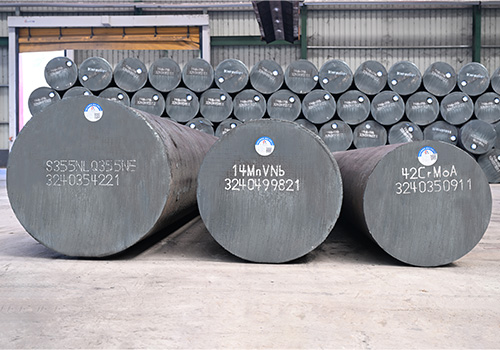
Steel prices have long been closely tied to global economic cycles, but recent years have brought a set of unexpected shifts. After the pandemic-driven spikes of 2021, steel prices have plunged to multi-year lows despite ongoing infrastructure projects worldwide. Meanwhile, demand patterns are changing: growth in emerging markets like India and Africa is brisk, even as traditional buyers slow. Environmental policies and the rise of “green steel” are adding new costs, and trade distortions (subsidies, tariffs, etc.) continue to reshape the market. In short, the global steel market today looks very different than it did just a few years ago.
Key surprising trends at a glance include:
- Historic lows in steel prices: Steel prices have fallen sharply from their 2021 peaks to the lowest levels in decades.
- Persistent oversupply: Massive capacity expansions and subsidies, especially in Asia and the Middle East, have created global oversupply, keeping prices depressed.
- Emerging-market demand growth: Contrary to the trend in developed economies, steel demand is rising rapidly in parts of Asia, Africa, and Latin America, offering some support to prices.
- Rising green steel costs: The transition to low-carbon steel (e.g. via hydrogen reduction) is still very expensive, meaning a “green premium” may emerge as carbon costs are applied.
- Policy and trade effects: Increased subsidies, carbon pricing (e.g. Europe’s CBAM), and tariffs are shifting steel trade flows and local prices, often in surprising ways.
Each of these factors is backed by data and expert analysis, and together they create a complex picture of today’s steel price environment. The sections below dive into these trends in detail, explaining the data and implications for global markets.
Trend 1: Global Oversupply Keeps Steel Prices Depressed
One of the most striking recent trends is that steel prices have collapsed to historic lows. After a strong rebound in 2021 and early 2022, prices have eroded steadily. By late 2025, many markets report prices well below previous cycles. For example, Asian steel prices in 2025 are “at historic lows” according to industry analysts. This is not a coincidence but the inevitable result of chronic oversupply.
According to the OECD, global steelmakers added enough capacity in recent years to drive capacity utilization down toward 70%, exerting “enormous pressure” on margins. Planned expansions from 2025–2027 could add another 165 million tonnes (about 6.7%) to world capacity. Yet demand growth remains sluggish. The OECD notes that the combination of new capacity and weak demand has pushed prices down from their 2021 peaks to levels that are unusually low by historical standards. In effect, too much steel has been chasing too little demand, and prices have been the casualty.
The data on production underscores this. Global crude steel output was about 1,882.6 million tonnes (Mt) in 2024 That was almost flat (–0.8%) with 2023 levels, despite significant new capacity coming online in several countries. Asia and Oceania alone produced 1,357.8 Mt in 2024 – roughly three-quarters of the world total – yet demand in some Asian markets has slowed. In other regions, production fell or rose only modestly. The end result is that total output (about 1,839.4 Mt in the 71 reporting countries) was slightly down year-over-year, even as capacity grew. (See Table 1 for a regional breakdown.) Table 1. Crude Steel Production by Region (Jan–Dec 2024, Mt). Most regions grew only modestly or contracted, leaving global output at 1,839.4 Mt (–0.9% YoY).
| Region | 2024 Production (Mt) | Change vs 2023 |
|---|---|---|
| Africa | 22.3 | +1.0% |
| Asia & Oceania | 1,357.8 | –1.0% |
| EU (27) | 129.5 | +2.6% |
| Europe, Other | 43.2 | +3.4% |
| Middle East | 54.1 | +0.5% |
| North America | 105.9 | –4.2% |
| Russia & CIS + Ukraine | 84.8 | –4.2% |
| South America | 41.9 | +0.6% |
| Total (71 countries) | 1,839.4 | –0.9% |
This table illustrates that supply is broadly ample. Asia’s output is vast, while several other regions actually cut production in 2024 (e.g. North America and Russia/CIS). Despite these cutbacks, the sums of all regions’ production still exceeded demand growth. In short, capacity remained high relative to consumption, pulling prices down.
One consequence of oversupply is that producers’ margins have collapsed. The OECD notes that steelmaker profitability plunged from the strong 2021 levels and is now “near historic lows”. With slim margins, mills are under pressure to cut prices to keep running. This vicious cycle – oversupply leading to low prices leading to weak margins – has been a dominant theme.
In summary, the first surprising trend is simply the persistence of low prices in the face of global supply growth. From 2022 onward, most steel markets saw prices drift downward. The OECD captured this well: “steel prices have declined from their 2021 peak to historically low levels, although they appear now to be bottoming out”. In practical terms, this means that year-end 2025 prices were still lower than the peaks of 2021, and only now showing tentative stabilization.
Trend 2: Emerging Market Demand Alters Steel Price Outlook
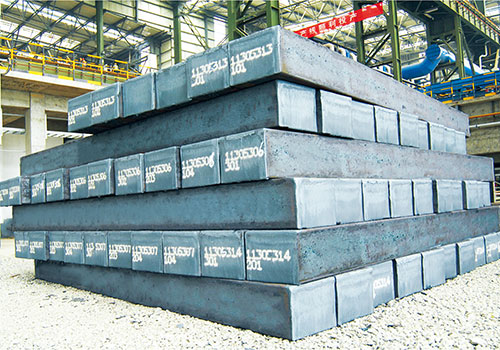
Ironically, the global demand side shows a more upbeat trend in some places than you might expect from the price story. While advanced economies have largely lacked major steel-led booms, emerging markets are picking up the slack – a shift that is reshaping the market.
Worldsteel’s forecasts illustrate this. They expect robust growth in “developing world excluding China” of roughly 3.4% in 2025 and 4.7% in 2026. India is the standout: after supply chain disruptions eased, Indian steel demand is projected to surge about 9% over 2025–2026, pushing it well past its previous peaks. Other parts of Asia (ASEAN) and the Middle East are also seeing above-average growth in steel consumption. Even Africa and Latin America, long weak spots in steel demand, have turned corners. For instance, Worldsteel notes that Africa’s steel demand grew about 5.5% per year over the past three years and reached roughly 41 Mt in 2025 – a notable rebound from a decade-long plateau. Central and South America, led by a rebound in Argentina and steady growth in Brazil, were also expected to see around 5.5% growth in 2025.
These emerging-market gains are surprising because they come amid overall global weakness. For example, Chinese steel demand, by far the world’s largest, is expected to be flat-to-down in 2025. But rising demand elsewhere partly offsets that decline. In total, worldsteel projects very modest overall growth (roughly 0–1% annually), but with a stark regional split. Developing economies will account for most of the growth, while OECD (developed) regions are either flat or shrinking in demand.
Why does this matter for prices? In a market with oversupply, strong demand pockets can support higher prices locally. For instance, Indian mills have seen steadier prices because domestic demand is robust. Similarly, new infrastructure in Africa and Latin America is absorbing steel, preventing price collapses there. In contrast, regions like Europe experienced a double-digit demand drop (EU demand fell 7.8% in 2022 and another 5% in 2023) which only began to recover in 2024.
As a result, one unexpected trend is the decoupling of regional price movements. Prices in some emerging markets have held up better, while others remain weak. A global index may be low, but localized shortages (e.g. in parts of Southeast Asia) sometimes lift the regional price temporarily. Overall, however, the net effect has been mild support rather than a price boom.
The key takeaway: even though rich countries haven’t boosted steel consumption recently, surging demand in markets like India, Southeast Asia, Africa, and Latin America is helping avert a deeper trough. This demand surge is one of the positive surprises and suggests that if global supply tightens or demand grows further, prices could rebound from current lows. But as of 2025, the growth in these markets is just offsetting the weakness elsewhere, leading to overall nearly flat demand and thus continued low prices.
Trend 3: Carbon Policies and “Green Steel” Introduce New Price Pressures
A less obvious but increasingly important trend is the impact of environmental policies and the advent of “green steel.” As the industry grapples with decarbonization, those changes are filtering through to prices. The surprising element is that producing low-carbon steel currently costs more than conventional steel, which could create upward price pressure in the future.
Consider the push toward hydrogen-based steelmaking. Using hydrogen (from renewable sources) instead of coal drastically cuts CO₂ emissions, but at a price. Industry analyses show that in 2025 price terms, producing steel with green hydrogen costs more than the average market price of steel. In other words, a “ton of green steel” carries a premium over regular steel. This premium exists because hydrogen production is still expensive. One consultancy notes that hydrogen-based steel is “economically unviable” at current hydrogen prices.
Meanwhile, regulatory policies like the European Union’s Carbon Border Adjustment Mechanism (CBAM) will make this even more critical. CBAM essentially extends carbon pricing to imported steel, meaning that from 2026 onward, foreign steel entering Europe will face costs reflecting its embodied carbon. Over the 2026–2034 period, Europe will phase out free emissions allowances (as CBAM phases in) so that by 2034 carbon-intensive steel will pay full carbon costs. The effect? Steel produced with traditional coal-based processes will gradually get more expensive, and low-carbon steel will become relatively cheaper by comparison.
All of this means two related developments for prices: (1) conventional steel in regions enforcing carbon costs is poised to become more expensive (the carbon cost gets added), and (2) demand for green steel may increase – but its high production cost means prices will still carry a large premium. In effect, we could see a wider price spread: dirty steel plus carbon tax vs. green steel premium.
For now, these factors have not dramatically raised global steel prices, because many exporters to EU (and other markets with carbon rules) are still under older regimes. But over time, carbon pricing is expected to lift the global price floor. The OECD notes that planned new capacity is still mostly carbon-intensive: 40% of new steel capacity through 2027 is expected to use blast furnace/basic oxygen furnace (high-emission) processes, slowing the green transition. However, as policies tighten, that high-emission steel will gradually incur extra costs, effectively raising its market price or shifting demand to greener steel.
In summary, a surprising trend is that “green” steel is not yet cheap. The high cost of decarbonization, coupled with evolving regulations, means steel prices are being reshaped by climate policy. Producers that invest in cleaner methods now bear higher costs, which could translate into higher steel prices later, or alternatively, they will absorb losses if they cannot pass costs on. Either way, carbon pricing introduces a new, upwards pressure on the underlying steel price level, which is a stark contrast to the deflationary factors noted above.
Trend 4: Trade Policies and Subsidies Reshape Steel Prices
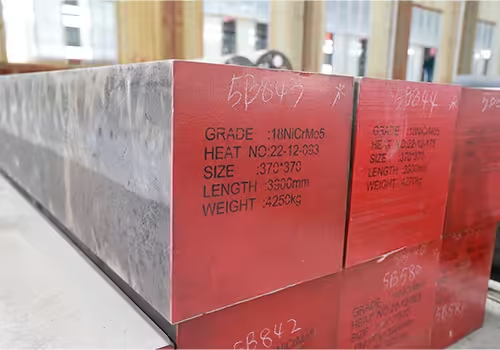
Another major set of surprises comes from trade and policy measures. Governments around the world continue to intervene in steel, often unpredictably, which has wide-reaching effects on prices. These interventions include tariffs, anti-dumping duties, quotas, and especially production subsidies. The result is an increasingly distorted market.
The OECD’s recent reports highlight how subsidies have exacerbated overcapacity. For example, China’s steelmakers benefit from subsidies (cheap loans, energy, etc.) at a rate about ten times higher (as a share of revenues) than OECD mills. These subsidies allow Chinese and some other non-OECD mills to sell steel at lower cost, flooding global markets. In fact, Chinese steel exports hit a record 118 million tonnes in 2024, more than double their 2020 level. This surge in exports has pressured world prices downward.
In response to these low-priced imports, many countries have imposed anti-dumping tariffs. During 2024, a surge of cases was noted: 19 governments opened 81 anti-dumping probes on steel, a fivefold increase from 2023. Some nations even widened tariffs to cover entire steel sectors. The upshot is that steel flows have become more volatile. Producers adapt by redirecting exports to markets with lighter restrictions or by shipping value-added products through third countries.
These trade tensions keep prices and markets unpredictable. In some protected markets (like those with high tariffs), domestic steel prices have remained relatively higher, even as global benchmarks fell. For instance, standard import-adjusted prices in North America have been much higher than in Asia, partly due to tariff walls. Meanwhile, Europe has taken some anti-dumping actions, and the new Carbon Border tax could be seen as another form of protection.
All this means that steel prices cannot be viewed as a single global number anymore. There are effectively multiple regional price regimes. A producer in one country might be able to sell at elevated local prices, while a competitor elsewhere barely breaks even. The surprise is how much these policies have proliferated: even as free markets would push prices toward equilibrium, trade measures keep propping up prices in protected markets and squeezing them in open markets.
Crucially, these policies also feed back into the oversupply story. By shielding domestic producers, governments encourage them to maintain high output even when global prices drop. This can prolong the global price slump. For example, the OECD warns that if policy distortions persist, global excess capacity could further worsen, further eroding prices and profitability. In short, subsidy-driven production and aggressive exports have exacerbated the price decline.
In conclusion, trade and industrial policies have created patchy pricing in the steel market. This fragmentation is surprising given the global nature of the commodity. It means that analyzing “steel prices” requires attention to policies: one country’s import tariff or subsidy program can ripple through global pricing.
Trend 5: Market Outlook and Price Indices Forecast
Finally, recent trends in price indexes and forecasts are worth noting. Industry analysts now speak of steel prices “bottoming out” and forecast only modest gains, which contrasts with past cycles where rebounds were sharper.
For example, price indices for key steel products are stabilizing at new lows. One widely cited steel price index (the MEPS World Steel Price Index) shows a gradual rise from multi-year lows in late 2024 into 2025, but still far from earlier highs. Actual prices (e.g. for hot-rolled coil or rebar) in many places have merely edged up 5–10% after collapsing. Analysts expect prices to recover slowly. S&P Global projects that U.S. prices might return to around $800 per short ton by mid-2026, but Asia and Europe may see only slight improvements.
The price volatility itself has changed. The wild swings of 2020–21 (when prices jumped 50–100% in months) have given way to a more muted 5–10% monthly range in 2024–25. This relative stability (at low levels) is another unexpected twist. It reflects both weaker demand impulses (fewer housing/construction booms) and the dampening effect of abundant inventory.
To put numbers on it: In the U.S., hot-rolled coil steel was trading near $850 in late 2025 (still below the peak of ~$1200 in 2022). In China, prices fell below 3,200 CNY/ton (around $450) by late 2025. European quotes for flat steel moved in a band roughly $500–700. These ranges are far below previous cycles’ peaks, confirming the “historic lows” narrative.
Looking ahead, virtually no forecaster expects a boom. Even Worldsteel’s optimistic 2026 demand rebound (1.3% growth) only implies a gradual price recovery. Some experts warn that volatility may still burst if a geopolitical shock or supply cut occurs – for instance, if major producers unexpectedly idle plants or if Chinese exports drop off. However, absent such shocks, the consensus is for flat to gently rising steel prices through 2026–27, with any upside largely tied to successful demand growth in developing regions and the slowdown of capacity additions.
In summary, the surprising aspect here is that even future forecasts are subdued. After many years of tight markets, analysts now describe steel pricing as “weak” with recovery postponed. The implication is that businesses and governments should brace for a prolonged period of low and stable steel prices, rather than an imminent spike.
Conclusion
The five trends above show that steel prices are being driven by a mix of unexpected forces. Oversupply and lackluster developed-market demand have pushed prices to the floor, while new factors like surging demand in parts of the developing world and rising carbon costs are quietly reshaping the landscape. Adding to the complexity are the policy interventions: subsidies and tariffs that create local anomalies.
For global markets, the net effect is that steel prices may remain unusually subdued in the near term, even as underlying fundamentals shift. Companies and investors should note that the usual cues (like a big stimulus or property boom) may not have the same impact on steel as in the past. Instead, attention will have to turn to how rapidly new demand can absorb the excess supply, and how policies (environmental and trade) alter cost structures.
In the short term, expect ongoing pressure on prices and profitability. Some analysts believe prices have already hit bottom, while others caution that any recovery will be modest. In the medium term, if emerging economies indeed start consuming much more steel, we could see higher prices. Conversely, if capacity keeps outpacing demand, the downward trend might extend.
Importantly, the global nature of these trends means no single country or sector can be looked at in isolation. Whether one is a steel producer, a downstream manufacturer, or an investor, understanding steel prices today requires a global view: watching capacity plans in Asia and India, following trade policy news (tariffs, subsidies, CBAM, etc.), and tracking energy markets that affect green steel costs.
In conclusion, steel prices have been trending sideways-to-down under a surprisingly broad array of forces. The interplay of oversupply, shifting demand geography, decarbonization costs, and government interventions makes for a complex picture. Stakeholders should stay informed of these trends and be prepared for a market where the old rules don’t fully apply.
FAQ
Why are steel prices so low right now?
In recent years, global steel output has significantly outstripped demand. Mills around the world added capacity (especially in Asia and the Middle East) while end-user demand softened. This oversupply situation, combined with weak demand growth in major economies, has driven prices down. The OECD and industry analyses note that prices have fallen from 2021 peaks to “historically low levels”. Essentially, too much steel is chasing limited demand, pushing prices lower.
Will demand growth in developing countries push prices up?
Growth in countries like India, Vietnam, Egypt, and parts of Africa has indeed been strong (often 5–9% annually). This helps support prices somewhat, but it has mostly offset declines elsewhere. In absolute terms, these regions still consume less per capita than rich countries, so their growth has not been enough to eliminate the global oversupply. It does mean prices may not fall further and could stabilize or gradually rise if growth continues. But a sharp global price rebound seems unlikely unless demand in developing markets accelerates even more.
How do carbon policies (like carbon taxes or CBAM) affect steel prices?
Carbon policies are gradually raising the cost of steel production in regions that adopt them. For example, the EU’s Carbon Border Adjustment Mechanism (CBAM) will impose costs on imported steel based on its carbon footprint. This effectively adds a carbon tax to the steel price. It means that, over time, conventional (coal-based) steel in such markets will be more expensive. In contrast, green steel (produced with hydrogen) will face lower or no carbon costs. So we can expect a spread to develop: dirty steel prices + carbon levy vs. green steel premium. Right now, green steel is still very costly to make, so the net effect is that steel produced in carbon-regulated markets will slowly become pricier relative to unregulated markets. In global terms, as more countries adopt carbon pricing, the baseline price of steel is likely to inch upward.
Are policy changes (tariffs, quotas) causing steel price volatility?
Yes, trade policies have a big impact. High tariffs or anti-dumping duties protect domestic producers, often keeping local prices artificially higher than world levels. Conversely, lack of barriers can lead to sudden inflows of cheap steel, depressing prices. For example, some regions with strict import tariffs have seen stable or rising local steel prices, while more open markets saw sharp price drops when oversupply hit. The rapid rise in Chinese steel exports (118 Mt in 2024) triggered many new trade restrictions, which can cause short-term swings as markets adjust. In summary, policy changes can create temporary imbalances: some segments of the world might see steel prices jump or crash depending on recent tariff news, before eventual rebalancing.
What is the outlook for steel prices?
Most analysts forecast a slow recovery or continued stability at low levels. With demand only slowly growing (about 1–2% per year globally after mid-2020s) and substantial capacity remaining, prices are expected to rise only gradually. Some bullish scenarios assume infrastructure spending and emerging-market growth pick up more strongly, which could nudge prices higher. But given current trends, many forecasts see steel prices hovering in a range through 2026–27, barring any major shock. For instance, S&P Global projected U.S. hot-rolled coil prices in the $800–900 per short ton range into 2026. It’s important to watch inventory levels and key economic indicators: if inventory builds up or demand wanes further, prices could slide even lower before any rebound.
How can steel buyers or producers prepare?
Staying informed is key. Buyers should track global production plans and policy developments (trade measures, carbon pricing), as these will signal potential price shifts. Long-term contracts may help hedge volatility. Producers should focus on cost efficiency and, where feasible, invest in cleaner production to prepare for future carbon costs. Both should consider geographic diversification: steel markets are no longer uniform, so selling or sourcing in multiple regions may mitigate risks.
By understanding these surprising trends – from persistent oversupply to shifting demand and policy impacts – stakeholders can better navigate the current steel price environment and plan for what comes next.