Why Does Top-Tier Hand Forging Always Begin with Understanding the Steel Billet?
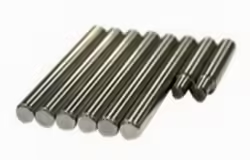
In the forging workshop, experienced artisans often spend a considerable amount of time on a seemingly unrelated task: quietly examining the raw steel billet on their workbench. This habit is not superfluous—true hand forging begins with a deep understanding of the raw material. The steel billet, this seemingly ordinary piece of metal, is in fact the material foundation of the entire forging process, determining the upper limit of the final creation.
Table of Contents
The Nature of the Billet: More Than Just a Metal Block
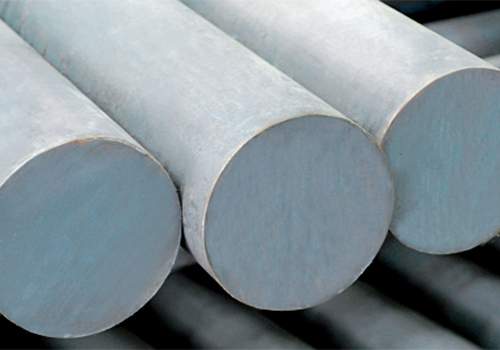
A high-quality steel billet prepared for hand forging is fundamentally different from ordinary metal. It undergoes precise smelting and controlled rolling, possessing a defined internal structure. When you select a billet of a specific grade, you are choosing not just material, but a series of predictable physical properties. In the process of hand forging, the billet acts like a silent collaborator—its chemical composition, grain structure, and uniformity will reveal different “personalities” under heat and hammer blows.
Modern hand forgers face a rich ecosystem of billet choices. From classic high-carbon steel billets like 1075 and 1084, to alloy tool steel billets like O1 and D6, and composite billets designed specifically for pattern-welded steel, each material serves different forging goals. For hand forging, understanding the differences between these billets is not an elective course, but a mandatory one.
How Quality Billets Enable Hand Forging
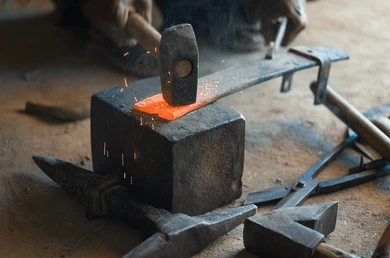
In the practical operation of hand forging, the value of a quality billet manifests on multiple levels. First is its malleability during forging. A billet with internal purity and uniform structure can withstand repeated heating and intense hammering without developing micro-cracks. This “forging-friendly” characteristic allows the hand forger to focus on shaping the form rather than battling material defects.
The heat treatment stage further highlights the value of a superior billet. After the hand forging shaping is complete, the billet requires quenching and tempering to achieve its final properties. Here, a billet with precise chemistry and high purity exhibits predictable transformation behavior. Taking 1084 steel billet as an example, it has a relatively wide heat treatment window, providing hand forgers with greater margin for error, making it an ideal material for learning heat treatment.
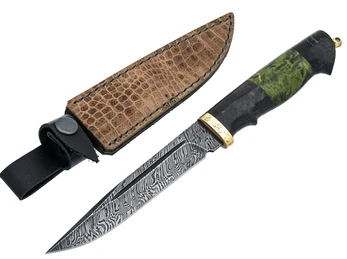
Advanced techniques in hand forging—such as pattern welding (Damascus)—are entirely dependent on quality billets. This art requires stacking and welding multiple layers of billets with different compositions, then creating complex patterns through directional forging. If the base billets have poor weldability or inconsistent composition, no matter how skilled the forging technique, clear, high-contrast patterns cannot be achieved.
The Wisdom of Selection: Matching the Billet to the Project
When seasoned hand forgers begin a new project, they select the billet in reverse based on the intended final use. This decision-making process considers several factors:
For knives requiring extreme edge retention, a high-carbon steel billet might be chosen; for tools used in damp environments, a stainless steel billet may be more suitable; and for display pieces, composite billets specialized for pattern welding provide the best canvas.
This choice is not merely technical—it reflects the hand forger’s deep understanding of material philosophy. Excellent forgers know their work is not to fight the material, but to guide the steel billet to express its inherent best qualities. Each act of hand forging is a unique dialogue with that specific billet.
From Billet to Creation: The Complete Journey of Value
When a rough steel billet is finally transformed into a refined blade, it completes a full journey of value. This journey begins with precise production at the metallurgical plant, passes through the fire and hammer of the forge, and ultimately realizes its full value in the user’s hands. Hand forging acts as the transformer in this process—converting the billet’s potential value into practical and aesthetic value.
This is also why an increasing number of blade users are beginning to pay attention to the complete story of a piece. They know that a truly excellent blade’s story starts with a carefully chosen steel billet, undergoes honest hand forging, and finally becomes a reliable tool that can accompany them for years. This value of integrity is difficult for industrial production to replicate.
Conclusion: Respecting the Starting Point to Achieve Excellence
In the world of hand forging, there is a consensus: no matter how exquisite the technique, it cannot surpass the inherent limitations of the material. A high-quality steel billet is not a guarantee of success, but it is a necessary condition for it. It provides the hand forger with a solid foundation, allowing their skill, creativity, and experience to be fully expressed.
The next time you admire an exquisitely hand-forged blade, consider its original form—that unadorned steel billet. Every heating, every hammer blow, every heat treatment it underwent was a profound collaboration between the forger and the material. At the heart of this collaboration lies a deep understanding and respect for the starting material—the steel billet. After all, all great hand-forged creations begin with the correct selection and meticulous handling of a quality billet.