8620 Steel Billet: A Comprehensive Guide to Its Properties and Applications
Table of Contents
The 8620 Steel Billet is a low-alloy grade renowned for its excellent combination of strength, toughness, and machinability. This material is often selected for manufacturing components that require high tensile strength and durability, making it a preferred choice for demanding industrial applications. Widely appreciated for its versatility, the grade is commonly used in industries ranging from automotive to aerospace. In this article, we will explore its key properties, applications, and maintenance considerations.
What is 8620 Steel Billet?
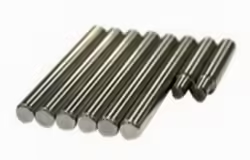
8620 Steel Billet is a low-alloy steel that contains elements such as carbon, chromium, molybdenum, and nickel. These elements contribute to its robust mechanical properties. Specifically, chromium and molybdenum are used to enhance the strength, hardness, and resistance to wear and corrosion, while nickel contributes to improving toughness. The steel is often processed into billets, which are large pieces of steel that can be further shaped into specific components, including shafts, gears, and other machinery parts.
The alloy composition of 8620 steel provides a fine balance between high tensile strength and excellent toughness, making it ideal for use in high-stress and high-heat environments. The steel can be heat-treated to improve its mechanical properties, ensuring optimal performance in demanding applications.
Key Properties of 8620 Steel Billet
1.Strength and Durability:
This steel billet possesses tensile strength that makes it suitable for applications requiring resistance to both mechanical stress and wear. Its high strength is further complemented by excellent toughness, enabling it to absorb energy and resist cracking under load.
2.Machinability:
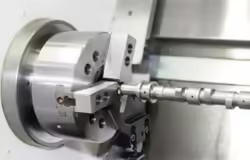
Despite its high strength, it is known for good machinability, meaning it can be relatively easily processed into different shapes and sizes. This is an important characteristic for industries that require precise and detailed manufacturing processes.
3.Hardness:
This material can be heat-treated to achieve a hard surface while maintaining a softer, more ductile core. This property makes it suitable for applications where surface hardness is critical, but the core needs to remain resilient.
4.Corrosion Resistance:
The alloying elements in 8620 steel, such as chromium, enhance its resistance to corrosion. However, for environments exposed to harsh chemicals or extreme moisture, additional coatings or surface treatments may be necessary to prolong its life.
Applications of 8620 Steel Billet
8620 steel billets are used in a variety of industries, each benefiting from the material’s strength, toughness, and machinability. Some of the key applications include:
1.Automotive Industry:
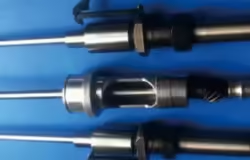
One of the most common uses of 8620 steel billets is in the automotive sector, particularly in the manufacturing of gears, shafts, and axles. These components are critical in vehicle drivetrain systems, where durability and high performance are essential.
2.Aerospace and Aviation
8620 steel billets are also used in aerospace applications, such as turbine blades, landing gear components, and structural parts. The steel’s high strength-to-weight ratio is crucial in these applications, where both durability and low weight are paramount.
3.Industrial Machinery:
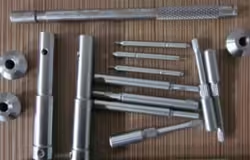
In industries such as construction, mining, and manufacturing, 8620 steel billets are often used for components like valves, gears, and shafts. The material’s excellent wear resistance makes it ideal for use in heavy-duty machinery that operates in harsh conditions.
4.Oil and Gas Industry:
Components used in oil and gas extraction often need to withstand extreme pressures and temperatures. 8620 steel billets are well-suited for this type of application, being used in tools and equipment that operate in harsh offshore and subsea environments.
5.Defense and Military Applications:
The strength and toughness of 8620 steel billets also make it an ideal material for defense and military equipment. It is used to manufacture critical parts such as gun barrels, armor-piercing ammunition components, and other high-strength military hardware.
Manufacturing and Heat Treatment of 8620 Steel Billet
8620 steel billets undergo a series of processes to achieve the desired mechanical properties. Typically, the manufacturing process involves the following stages:
1.Casting:
The steel is first melted in an electric arc furnace and then cast into billets. This process ensures that the steel is free of impurities and has the desired chemical composition.
2.Forging and Rolling:
After casting, the billets are forged and rolled to shape them into their final forms. This process helps to refine the grain structure of the steel, enhancing its strength and durability.
3.Heat Treatment:
To improve hardness and strength, 8620 steel billets undergo heat treatment processes such as carburizing. This involves heating the steel to a high temperature in a carbon-rich environment, followed by quenching and tempering to achieve the desired surface hardness and core properties.
Maintenance of 8620 Steel Billet Components
To ensure the longevity of components made from 8620 steel billets, regular maintenance is essential. Some key maintenance tips include:
1.Inspection for Wear and Tear:
Regularly inspect components for signs of wear, cracks, or deformation. Pay particular attention to high-stress areas like shafts and gears.
2.Lubrication:
Use appropriate lubricants to reduce friction and wear on moving parts. Proper lubrication can significantly extend the lifespan of components made from 8620 steel billets.
3.Corrosion Protection:
If the components are exposed to harsh chemicals or moisture, it is important to apply coatings or perform regular cleaning to prevent corrosion.
4.Heat Treatment:
Periodically, heat treatment may be necessary to restore the desired hardness and strength, especially if the component has been exposed to extreme conditions.
Conclusion
8620 Steel Billet is a versatile and high-performance material known for its durability, making it widely applicable across industries such as automotive, aerospace, and industrial machinery. This alloy offers an ideal balance of high strength, toughness, and machinability, which makes it especially suitable for components operating under harsh conditions. Proper manufacturing practices and regular maintenance of parts made from this steel can substantially extend their service life and enhance overall performance.
For those looking to learn more about 8620 Steel Billet and its applications, click here to explore further details.