Optimizing Carbon Steel Machining Processes: Practical Solutions for Tool Wear and Heat Treatment Issues
Table of Contents
Carbon steel machining is essential for manufacturing durable components used in a variety of industries, including automotive, aerospace, and machinery. However, engineers and manufacturers often face several challenges in machining carbon steels, especially when it comes to tool wear, heat treatment, and achieving the desired material properties.
This article provides practical solutions to common issues faced during carbon steel machining, including techniques for tool wear, managing heat treatment processes, and improving machining efficiency. Whether you are working with medium carbon steels like 1020 or other similar grades, the following solutions will help optimize your machining processes and improve final part quality.
Carbon Steel Machining: Key Challenges with Tool Wear
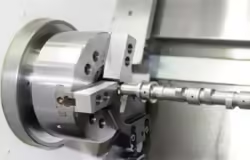
One of the most common issues in carbon steel machining is excessive tool wear, which reduces tool life, increases costs, and impacts the surface finish of parts.
Solution:
- Optimizing Cutting Speeds: Reducing cutting speeds helps manage heat generation, which in turn reduces tool wear. Lower speeds prevent excessive friction that leads to premature tool failure.
- Tool Material Selection: For machining carbon steel, use harder materials like carbide or high-speed steel (HSS), which offer better wear resistance compared to conventional tool steels.
- Cooling and Lubrication: Proper coolant application is essential. Using the right coolant not only reduces temperature but also extends tool life by reducing friction between the tool and material.
By managing these factors, you can significantly reduce tool wear and improve machining efficiency, ensuring high-quality results with minimal downtime.
Steel Hardness and Heat Treatment: Achieving the Right Properties
The hardness of carbon steel plays a significant role in machining performance, particularly in applications that require high wear resistance. However, achieving the desired hardness can be challenging when working with medium carbon steels like 1020 steel.
Solution:
- Heat Treatment Process: Use quenching to increase hardness after the steel has been heated to a specific temperature. After quenching, it’s essential to temper the steel to balance hardness with toughness, preventing brittleness while maintaining strength.
- Carburizing: For parts that need higher surface hardness, carburizing can be applied. This process adds carbon to the surface layer, enhancing hardness without affecting the inner core, which maintains ductility.
- Post-Treatment Testing: Always test the material after heat treatment to ensure the desired properties are achieved. Hardness tests and microstructure analysis are crucial steps in this process.
By carefully managing the heat treatment process, you can tailor the hardness and strength of carbon steel to meet specific application requirements, improving part performance and longevity.
Welding Challenges with Carbon Steel: Preventing Cracking and Distortion
Welding carbon steel can lead to problems such as cracking and distortion, especially when dealing with high-carbon steels or medium carbon grades. These challenges arise due to the material’s susceptibility to thermal expansion and contraction during the welding process.
Solution:
- Preheating: Preheating carbon steel before welding helps reduce thermal shock and prevents cracking during cooling. By warming the steel to a moderate temperature, you can control the cooling rate and minimize distortion.
- Proper Welding Techniques: Use multi-pass welding techniques and maintain a consistent interpass temperature to avoid excessive heat buildup. This reduces the risk of thermal cracking and ensures the weld is structurally sound.
- Post-Weld Heat Treatment (PWHT): After welding, a stress-relieving heat treatment may be necessary to reduce residual stresses and prevent cracking in the heat-affected zone (HAZ).
By following these techniques, you can minimize the risk of weld-related defects and improve the overall quality of your welded carbon steel parts.
Steel Fatigue Resistance: Improving Durability Under Load
Fatigue resistance is crucial for parts subjected to repeated stresses. Carbon steel, especially 1020 steel, is often used in components like gears, shafts, and springs, which experience cyclic loading during operation.
Solution:
- Surface Hardening: Apply shot peening or nitriding to improve fatigue resistance. These processes strengthen the surface layer of the steel, making it more resistant to crack initiation and propagation under cyclic loading.
- Optimizing Design: Stress concentrators, such as sharp corners and notches, can lead to premature fatigue failure. Use design features like fillet radii to reduce localized stresses and enhance the material’s fatigue life.
- Material Selection: For higher fatigue resistance, consider using higher carbon steels or alloys that offer better performance in dynamic applications, or improve the fatigue life of 1020 steel by refining its microstructure through proper heat treatment.
By enhancing fatigue resistance, you can significantly increase the lifespan of critical components, ensuring they perform reliably under demanding conditions.
Conclusion: Optimizing Carbon Steel Machining for Better Performance
Optimizing carbon steel machining processes is essential for producing high-quality, durable parts. By addressing common challenges like tool wear, managing heat treatment processes, and improving welding techniques, manufacturers can ensure the efficiency and longevity of their parts. Additionally, improving fatigue resistance and maintaining strict quality control standards help enhance the overall performance of carbon steel components.
Need advice on improving your carbon steel machining process? Contact our expert team today for tailored solutions to optimize your production and achieve higher quality and efficiency in your operations.