How to Choose the Perfect Steel Billet for Your Industrial Needs
Steel billets are a critical material used in a wide range of industrial applications, especially in manufacturing processes such as forging, rolling, and extrusion. Choosing the right billet is essential for ensuring product quality and meeting specific mechanical requirements. This guide outlines the key factors to consider when selecting billets for various industrial purposes, helping manufacturers make informed decisions that align with their production needs and cost goals.
Table of Contents
Understanding Steel Billets
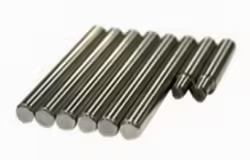
Before diving into the selection process, it’s important to understand what these semi-finished products are. A billet is primarily used in the production of long steel products such as bars, rods, and structural shapes. Typically produced by casting molten steel and cooling it to a solid state, billets come in various shapes, sizes, and grades, each tailored for specific industrial needs. Depending on the intended use, the type of billet chosen can significantly affect the performance and durability of the final product.
Key Factors in Selecting Steel Billets
When choosing a steel billet for your industrial application, several factors come into play. Below are the most important considerations:
1.Material Composition and Grade
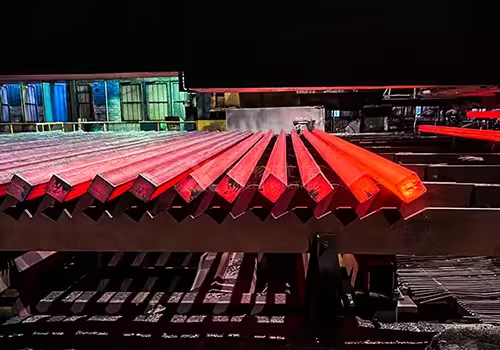
The composition of the steel billet is critical to determining its performance in various applications. Steel billets come in different grades, with variations in chemical composition that affect their strength, ductility, and resistance to wear and corrosion. Common grades include carbon steel, alloy steel, and stainless steel, each with specific applications.
- Carbon Steel Billets: Known for their strength and durability, often used in construction and automotive manufacturing.
- Alloy Steel Billets: Contain additional alloying elements like chromium, nickel, or molybdenum, providing enhanced performance in high-stress environments.
- Stainless Steel Billets: Corrosion-resistant, making them ideal for industries like food processing and medical equipment manufacturing.
Selecting the right steel billet grade based on material needs will ensure that the product performs optimally and meets required specifications.
2.Size and Dimensions
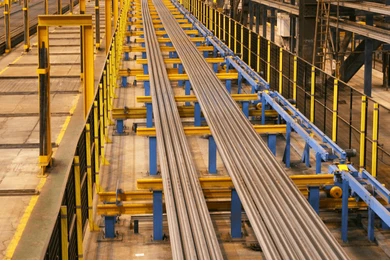
The size of the steel billet plays a significant role in the production process. Billets are typically manufactured in standard sizes, but custom dimensions may be needed depending on the application.
- Diameter and Cross-Section: The diameter of the billet determines how it can be shaped and forged. Larger billets are typically used for heavy-duty machinery, while smaller billets are ideal for precision components.
- Length: The length of the billet can impact the efficiency of manufacturing processes such as rolling. Choosing the correct length based on production needs will reduce waste and increase cost-effectiveness.
Careful consideration of the steel billet dimensions will ensure minimal material waste and better utilization during manufacturing.
3.Mechanical Properties
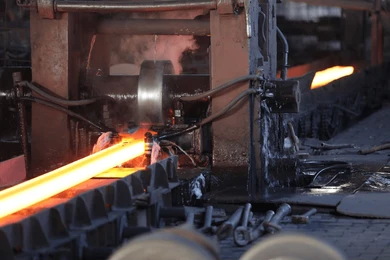
Mechanical properties such as tensile strength, hardness, and toughness are fundamental when selecting a steel billet. These properties determine how the billet will perform under stress and in harsh operating conditions.
- Tensile Strength: Important for components that will experience high stress or strain, such as structural beams or heavy machinery parts.
- Hardness: A higher hardness level is essential for billets used in tools, dies, and wear-resistant parts.
- Ductility: For billets that will undergo extensive shaping or bending, ductility is important to prevent cracking.
By evaluating these mechanical properties, manufacturers can choose billets that are strong, durable, and suitable for their specific applications.
4.Surface Quality
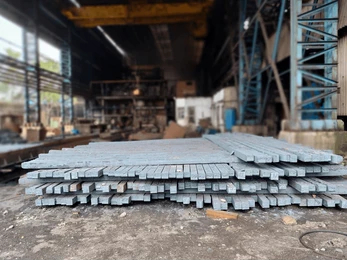
The surface quality of the steel billet is another key factor. A smooth and defect-free surface is essential to ensure that the billet can be easily processed during subsequent stages of manufacturing.
- Surface Defects: Look for billets with minimal surface defects such as cracks, pitting, or scaling, as these can affect the quality of the final product.
- Coating and Oxidation: Some billets come with protective coatings to prevent oxidation during transport and storage. Choose billets with proper surface treatment to avoid contamination.
Investing in high-quality billets with excellent surface finishes will lead to smoother manufacturing processes and better-quality end products.
5.Cost and Availability
While steel billet cost is always a consideration, it’s essential to balance cost with quality. Lower-cost billets may seem attractive but could lead to higher expenses down the line due to poor performance, defects, or the need for additional processing.
- Bulk Purchasing: Consider suppliers that offer competitive prices on bulk orders, which can significantly reduce overall production costs.
- Availability and Lead Time: The availability of billets and lead times should also be taken into account. Long waiting times can delay production schedules and increase costs.
Choosing billets with a reasonable cost while meeting quality standards is essential for maintaining cost-effectiveness without compromising the product’s performance.
Industry-Specific Considerations
Different industries have unique requirements for steel billets. Here are a few examples:
- Automotive Industry: Billets used in automotive manufacturing need to be strong and lightweight. Typically, high-strength alloy billets are selected for engine parts and chassis.
- Construction Industry: Billets for the construction sector must have high tensile strength and resistance to corrosion. Carbon steel or alloy steel billets are most commonly used.
- Heavy Machinery and Aerospace: Billets in these industries require superior performance under extreme conditions. They are often made from high-alloy or heat-resistant steel.
Understanding the specific needs of your industry will help guide your selection of steel billets.
Conclusion
Choosing the right steel billet is essential to achieving high-quality, durable products in various industrial applications. By considering factors such as material composition, size, mechanical properties, surface quality, and cost, manufacturers can make informed decisions that optimize both production efficiency and product performance. Whether you’re working in the automotive, construction, or aerospace industry, selecting the appropriate steel billet ensures your production process runs smoothly and your end products meet the highest standards.