Why Does Sawing Steel Make Heat?
Table of Contents
Sawing steel square bar stock converts mechanical work into heat as teeth deform chips and contacting surfaces slide against one another.
Sawing steel makes heat because the cutting teeth do mechanical work on the metal. Material near each edge undergoes intense deformation as it becomes a chip, while contacting surfaces also rub against one another. Much of that work becomes thermal energy. A square steel bar can therefore heat up during cutting even though the saw is not designed as a heater.
Friction is part of the explanation, but “the blade rubs the steel” leaves out the important work of actually making the chip.
Meet one tooth
A cutting tooth does not pass through steel as if it were already an empty gap. It presses into material ahead of the edge. That material deforms and separates into a chip, which then moves along the tool surface.
Deforming a small volume of metal by a large amount requires energy. The resulting chip is not simply an untouched slice moved to another location; its structure and shape have been worked during separation.
Contact between the moving chip and tool adds frictional heating. Contact around the cutting edge can also include rubbing and plowing, especially where material is displaced without forming an ideal chip.
Experimental research on friction under metal-cutting conditions examines the combined influence of plastic deformation and frictional heat generation. A saw tooth participates in the same general class of cutting contact, even though its geometry and motion differ from a turning tool.
The chip has been worked, not merely relocated
Imagine separating an already loose washer from a stack. Little permanent deformation is needed because the gap already exists. A saw tooth faces a different task: the steel ahead of it is connected to the rest of the workpiece. The tooth must create the separated material that becomes the chip.
Near the edge, that material can undergo very large local deformation over a short distance. The finished chip’s thickness, curvature, and internal state need not match the untouched layer from which it came. Mechanical work is required to produce those changes.
Friction adds another contribution as the chip moves across the tooth surface and other contacting regions slide or rub. Saying that heat comes only from friction would miss deformation work. Saying that it comes only from the chip’s separation would miss the contacting surfaces. Several interactions occur together in the small cutting zone.
A band saw distributes this work among a moving sequence of teeth. Each tooth encounters material, forms a chip, and moves away from that particular contact. The visible continuous cut is built from many individual cutting events. The heat source is therefore localized and moving rather than a uniform heater wrapped around the whole bar.
That distinction helps explain why a large piece can remain relatively cool away from the cut while the tiny active region experiences much more intense conditions. The amount of steel immediately involved at a tooth is small compared with the entire stock length.
The heat does not all stay in the bar
Once generated, thermal energy moves among the chip, the blade, the workpiece, and the surroundings. A chip can carry heat away as it leaves. The blade can absorb heat and transport it through its motion. Some heat conducts into the remaining steel.
This is why the temperature of the finished cut face does not reveal all the energy generated during cutting. Much of the active contact has already moved on, and the departing chips have taken part of the energy with them.
The proportions are not fixed for every saw and cut. They depend on the contact, the materials, and how quickly heat can travel through each part of the system.
Energy, power, and temperature answer different questions
Energy is an amount. Power is a rate of transferring or converting energy. Temperature describes a thermal state. These quantities are related, but a large energy amount does not by itself identify the highest local temperature reached during a cut.
For a deliberately abstract example, suppose a process converts 100 joules of work into thermal energy over 10 seconds. Its average rate is 10 watts. If the same amount is converted in one second, the average rate is 100 watts. The total energy is identical, but it is supplied ten times as quickly.
Whether the second event reaches a higher temperature also depends on where that energy goes and how quickly it can leave. A small region receiving energy rapidly has a different situation from a much larger mass receiving the same total gradually. The 100-joule example explains units and timing; it does not describe a measured saw cut.
Similarly, a chip can be hot without containing most of the total energy involved in processing a large bar. Temperature alone does not tell you its total thermal energy. The amount of material and its thermal response also matter.
This is why the temperature of the stock far from the cutting zone cannot serve as a complete measure of cutting conditions. It is a measurement at a different place in a system through which energy is constantly moving.
The tooth, chip, and cut face have different journeys
The chip begins as part of the bar, becomes intensely deformed near the cutting contact, and then departs. The tooth repeatedly enters and leaves contacts as the blade moves. The workpiece stays behind while heat conducts away from the newly made surface. Each object has its own temperature history.
Imagine trying to describe a busy station by measuring only the people standing on one platform after a train has left. The departing passengers are missing from that snapshot. A cut-face measurement taken after the teeth and chips have moved on similarly observes only the remaining part of an earlier energy exchange.
Heat transfer also continues after the material is separated. Temperature differences drive energy from hotter regions toward cooler ones. A surface observed seconds later is already farther along its cooling history than it was at the instant a tooth created it.
For this reason, touching a newly cut piece is neither a useful reconstruction of the cutting-zone temperature nor a safe measurement method. It gives no precise information about the hottest small contact that existed earlier. A technical temperature question needs a defined measurement location and time.
Hot does not always mean visibly glowing
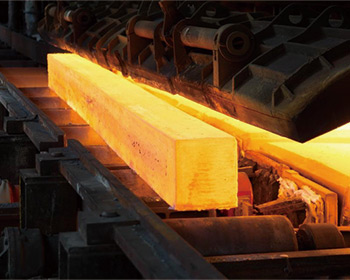
A cutting region can be warm or very hot without producing a visible orange glow. Our eyes detect only a limited part of the thermal story. Small localized contacts can also change temperature much faster than the bulk bar.
Visible sparks, where they occur, are not a direct thermometer for the entire workpiece. They involve small particles with their own heating and oxidation behavior. The bar can remain comparatively cool away from the contact while tiny departing particles behave differently.
Cutting fluids, when used, can carry heat away and affect lubrication, but they do not remove the need to deform the chip. Energy is still required to turn a continuous solid into separate pieces.
What the square section changes in the scene
A square bar presents a particular outline to the moving blade. The length of blade contact through the section changes as the cut progresses and depends on the bar’s orientation. That changes which teeth are engaged and where the cutting activity occurs, even though the underlying heat-producing mechanisms remain deformation and contact.
Cutting through a broad region and approaching the final edge are therefore different moments in one cut. The overall stock dimensions do not tell us that every tooth experiences an identical contact throughout the operation. Geometry helps distribute the work in time and space.
This explanation concerns where the energy comes from, rather than calculating a universal heat input for a given bar size. The grade, material condition, tool, contact, and operating conditions all enter the actual process. A single word such as “square” cannot set a fixed cutting temperature.
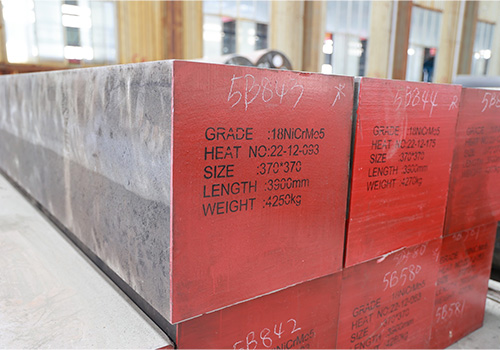
Jiyuan’s square-bar offering includes carbon and alloy steel sections from 150 × 150 to 500 × 500 millimeters in its published range. These substantial sections provide stock for later processing into smaller blanks or parts. Understanding the cutting contact helps explain why preparing a blank is itself a machining operation, not merely dividing a drawing into lengths.
The cut surface is left behind after a sequence of teeth has deformed and removed the metal in front of it. The chips have departed, the blade has moved on, and heat continues to spread. A warm cut face is one surviving part of that moving process, not a record of all the energy the motor supplied.
Tracing Heat from a Saw Tooth
Is friction the only reason sawing steel produces heat?
No. The metal also undergoes substantial plastic deformation as each tooth forms a chip. That work contributes to heating alongside sliding and rubbing at the contact. Describing only friction leaves out the energy needed to transform connected steel into a departing chip.
Does the cut face retain all the heat generated during sawing?
No. Thermal energy is distributed among chips, blade, workpiece, and surroundings. Departing chips can carry part away, and the blade moves beyond the contact. A later cut-face temperature therefore does not reconstruct all the energy or the hottest earlier cutting region.
If you are considering square-bar material for that route, describe the grade, section, intended blank length, and the work that follows cutting. This connects the starting-stock request to the shape that will be handled next, without assuming one sawing arrangement or service for every material.