AISI 1045 Steel Properties, Metallurgy, and Industrial Sourcing Guide
In the hierarchy of industrial materials, few alloys achieve the balance of versatility and cost-effectiveness offered by AISI 1045 Steel. As a medium-carbon grade, it serves as the foundational “workhorse” for the global manufacturing sector. Whether it is transformed into precision-machined gears or used as raw material for high-volume forging, this grade is defined by its predictable response to heat treatment and its robust mechanical integrity.
For engineers and procurement managers, understanding AISI 1045 Steel is a prerequisite for optimizing component longevity and production ROI. This 1045 Carbon Steel Guide moves beyond surface-level descriptions, diving into the metallurgical nuances that dictate performance in high-stress environments.
Table of Contents
Chemical composition of AISI 1045 steel
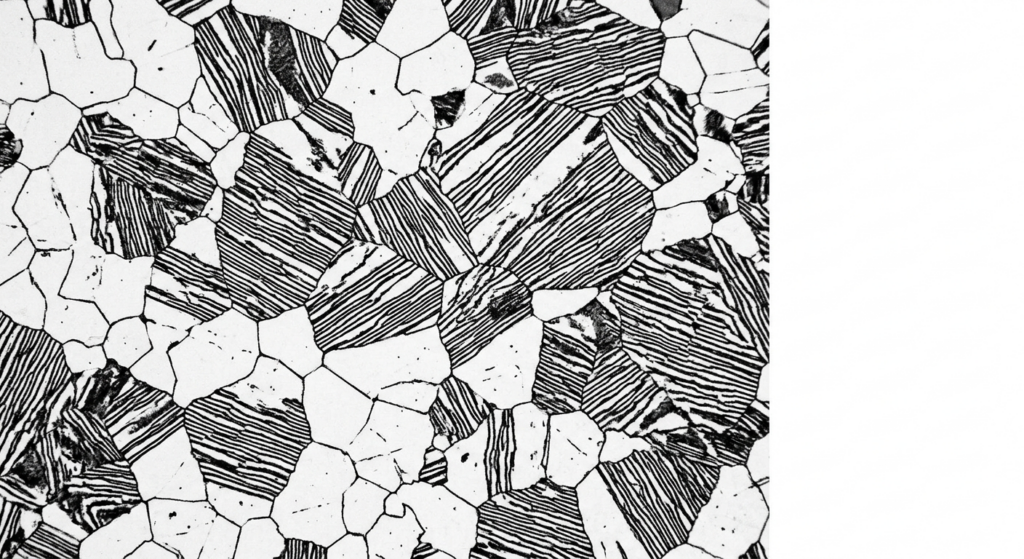
The performance of AISI 1045 Steel is a direct consequence of its chemical fingerprint. Specifically categorized under the ASTM A29 standard, its carbon content ranges from 0.43% to 0.50%. This specific carbon window allows the material to achieve higher strength than low-carbon grades like 1018, while maintaining sufficient ductility for forming.
Beyond carbon, the inclusion of Manganese (0.60%–0.90%) is critical. Manganese acts as a deoxidizer and increases the material’s hardenability. In the context of Industrial steel billet sourcing, verifying the chemical heat analysis is the first step in quality assurance. High-quality billets must also maintain strict limits on Phosphorus (≤ 0.040%) and Sulfur (≤ 0.050%) to prevent cold shortness and hot-shortness during subsequent processing.
Understanding how to verify AISI 1045 chemical composition for billet quality involves reviewing the Mill Test Certificate (MTC). A genuine MTC, compliant with EN 10204 3.1, ensures that the melt meets the precise AISI 1045 manufacturing standards required for safety-critical applications.
Mechanical properties of AISI 1045 steel
The mechanical profile of AISI 1045 Steel is not a fixed set of numbers but a spectrum that shifts based on the delivery condition. Understanding AISI 1045 mechanical properties vs heat treatment is essential for selecting the right state for your application.
| Property | As-Rolled (Hot Rolled) | Normalized | Annealed |
| Tensile Strength (MPa) | 570 – 700 | 630 – 750 | 540 – 620 |
| Yield Strength (MPa) | 310 – 450 | 380 – 500 | 280 – 350 |
| Elongation (%) | 15 – 20 | 18 – 25 | 20 – 30 |
| Hardness (HB) | 170 – 210 | 180 – 230 | 150 – 180 |
In its as-rolled state, AISI 1045 Steel provides a baseline of strength suitable for structural members. However, for precision machining, a normalized or annealed state is often preferred to ensure grain uniformity and reduced internal stresses.
Authority Reference: For comprehensive material data sheets, the ASM International Materials Data Repository provides standardized mechanical properties for medium carbon steels under various thermal conditions.
AISI 1045 steel heat treatment
The primary reason for the dominance of AISI 1045 Steel in the industry is its exceptional response to thermal processing. It is the “standard” material for induction hardening, a process that hardens the surface while leaving a tough, ductile core.
Quenching and Tempering (Q&T)
For high-performance shafts and axles, AISI 1045 Steel is typically through-hardened. The process involves heating the steel to its austenitizing temperature (820°C – 850°C), followed by quenching in water or oil. To alleviate the resulting brittleness, the steel is then tempered at temperatures between 400°C and 650°C. This specific sequence allows engineers to “tune” the hardness-to-toughness ratio.
Induction Hardening
Because of its carbon level, AISI 1045 Steel can reach a surface hardness of 54–60 HRC (Rockwell C). This makes it ideal for components subjected to localized wear, such as gear teeth, cam surfaces, and cylinder rods. Unlike alloy steels, it achieves these properties without the high cost of alloying elements like Chrome or Nickel.
Global Equivalents for AISI 1045 (C45, S45C, CK45)+
In a globalized supply chain, Industrial steel billet sourcing often requires cross-referencing international standards. While AISI 1045 Steel is the American designation, you will encounter virtually identical grades in other regions.
- Europe (EN 10083-2): C45 or 1.1191.
- Germany (DIN): CK45.
- Japan (JIS G4051): S45C.
- China (GB/T 699): 45# Steel.
While these are considered Global equivalents for AISI 1045 (C45, S45C, CK45), procurement professionals should be cautious. Minor differences in the allowable range of Silicon or residual elements (like Chromium or Nickel) can affect weldability or the depth of the “hardenability band.” Always specify the primary standard in your purchase order to ensure compliance with your local AISI 1045 manufacturing standards.
Industrial Steel Billet Sourcing Strategies
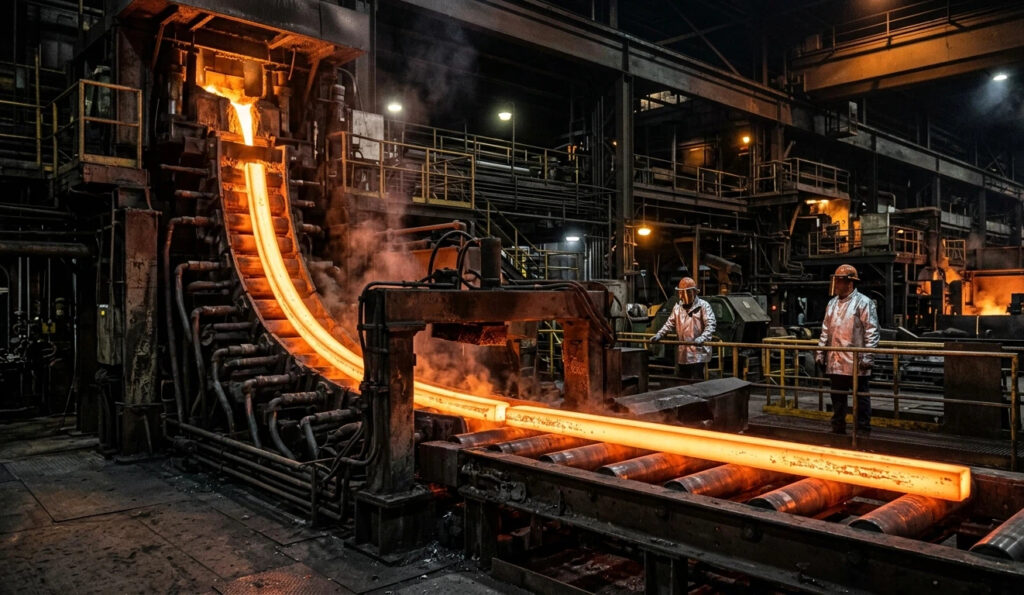
Sourcing steel billets at scale requires a focus on “Internal Cleanliness” and “Surface Integrity.” In the world of Industrial steel billet sourcing, a lower price often masks internal porosity or non-metallic inclusions that lead to component failure during forging.
When evaluating a supplier, prioritize those who utilize vacuum degassing (VD) during the melting process. This removes dissolved gases like Hydrogen, which can cause internal cracking. Furthermore, surface quality is paramount; billets intended for high-quality bars should be checked for “seams” or “laps” that could propagate during the rolling process.
Macro-economic factors also dictate sourcing costs. Fluctuations in iron ore prices, graphite electrode availability, and energy surcharges are the three pillars that move the market. A sophisticated sourcing strategy for AISI 1045 Steel involves long-term contracts with established mills that provide transparent “Melt and Manufacture” traceability.
Typical Applications and Machinability
The machinability rating of AISI 1045 Steel is approximately 70% of the B1112 standard. This means it is relatively easy to turn, mill, and drill compared to higher alloy steels. Its balanced properties make it the preferred choice for:
- Automotive: Crankshafts, connecting rods, and axle shafts.
- Machinery: Transmission gears, hydraulic rams, and guide pins.
- Construction: Heavy-duty bolts, studs, and industrial fasteners.
While it can be welded, AISI 1045 Steel requires pre-heating (approx. 200°C–300°C) and post-weld stress relieving to prevent hydrogen-induced cracking in the Heat Affected Zone (HAZ). For applications requiring extensive welding, lower carbon grades are usually prioritized.
Conclusion
Mastering the use of AISI 1045 Steel is about respecting its metallurgical limits while exploiting its mechanical strengths. By adhering to strict AISI 1045 manufacturing standards and focusing on clean Industrial steel billet sourcing, manufacturers can produce high-performance parts without the premium cost of exotic alloys.
This 1045 Carbon Steel Guide serves as a reminder that in engineering, the most expensive material isn’t always the best; the best material is the one whose properties are most precisely matched to the load, the environment, and the budget. In the global industrial arena, AISI 1045 Steel remains the undisputed king of the mid-market, providing the structural backbone for the machines that build our world.
FAQ
Can AISI 1045 Steel be case hardened?
While it can be induction hardened, it is not typically carburized (case hardened in the traditional sense) because its high core carbon content already provides significant strength. Carburizing is usually reserved for low-carbon steels like 1018 or 8620.
What is the main difference between 1045 and 4140?
1045 is a plain carbon steel, whereas 4140 is a “Chromoly” alloy steel. 4140 has much higher hardenability and fatigue strength but is significantly more expensive and more difficult to machine.
Does AISI 1045 Steel rust easily?
Yes. As a plain carbon steel, it has no inherent corrosion resistance. Components must be oiled, painted, or plated (e.g., hard chrome plating for hydraulic rods) to prevent oxidation.
Is 1045 steel considered “Tool Steel”?
No, it is a structural carbon steel. While it can be used for simple hand tools (like hammers), it lacks the alloying elements (Tungsten, Vanadium, Molybdenum) required for high-speed cutting tools.