Why Are There Different Types of Spring Steel?
Table of Contents
Spring steel grades serve different demands because composition, treatment, spring geometry, and loading all influence the final response.
There are different types of spring steel because springs work in different conditions and take different shapes. A tiny wire spring, a broad leaf spring, and a spring exposed to a corrosive environment do not ask exactly the same things of their material. Composition and processing help steel meet those different demands.
All springs share one basic idea: they deform, store energy, and release that energy as they move back toward their original shape. But “springy” combines several separate material and geometric behaviors.
A soft-feeling spring can be made of strong steel

Press the spring in a pen and it moves easily. That does not prove that its steel is weak. The coil’s geometry allows a small force to produce a noticeable movement. Change the wire thickness, coil diameter, or number of active turns and the same material can produce a very different spring response.
At the material level, stiffness describes how much elastic deformation occurs under stress. Strength concerns how much stress the material can sustain before specified changes or failure. These properties are related to different features of the material and should not be treated as synonyms.
For many ordinary steels, changes in grade and heat treatment can alter strength much more dramatically than elastic stiffness. A stronger condition can permit a larger useful elastic stress range without making a geometrically identical piece proportionally harder to bend at small loads.
Separate the force you feel from the energy being stored
For an ideal linear spring, force rises in proportion to displacement: F = kx. The symbol k is the spring rate, and x is the distance the spring has moved from its unloaded position. The word linear means that doubling the displacement doubles the force within the range being modeled.
Take a purely illustrative spring rate of 10 newtons per millimeter. Moving the spring 2 mm requires 20 N in this ideal model. Moving it 5 mm requires 50 N. The rate describes the whole spring, including its geometry, rather than only the steel from which it was made.
The stored energy is one-half times k times x squared. At 5 mm, that gives 0.5 × 10 × 25 = 125 newton-millimeters, or 0.125 joule. The one-half appears because force rose from zero to its final value during the movement rather than staying at the final value throughout.
MIT’s teaching notes on energy storage in mechanical systems describe this ideal spring relationship. It is a useful model, not a claim that every real spring stays linear over every possible travel.
This distinction helps explain why two springs can feel different despite using related steel. Their shapes establish different relationships between external movement and the strains in the material. The material must then tolerate those strains and the associated stresses over the intended working range.
Returning once is different from returning repeatedly
A spring also has to avoid permanent set: a lasting shape change after the load is removed. If a spring is pushed beyond its useful elastic range, it may not return to where it started.
Repeated use adds fatigue. A spring can survive one loading event and still accumulate damage through many cycles. Surface condition, internal structure, and the stress pattern all become part of that repeated-loading story.
Temperature and environment add further demands. A spring working beside heat is not in the same situation as one protected inside a dry indoor mechanism. Corrosion can alter a surface that is already repeatedly stressed. This is why a material suitable for one setting is not automatically the universal spring material.
The ingredients and treatment work together
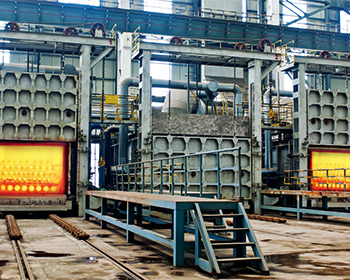
Spring steels include different carbon and alloy steel families. Alloying elements can influence how a section responds to hardening, how it behaves during heating, and other aspects of performance. The finished condition depends on processing as well as composition.
ASTM A689 covers carbon and alloy steel bars for springs. Even this one product category contains multiple material possibilities; the word “spring” names a purpose, not one universal recipe.
The shape in which the steel is used matters as well. A wire spring and a flat spring put their material into different geometries and manufacturing routes. The eventual spring is a partnership between the steel’s properties and the way its form directs the load.
A coil does not make the wire experience only compression
Pressing a coil spring shortens the overall spring, so it is natural to imagine the wire simply being squeezed along its length. The helical geometry changes that picture. In an ordinary helical compression spring, much of the wire’s response involves twisting.
Spring manufacturer Lesjöfors explains this in its discussion of how springs work: axial displacement of the compression spring produces torsional stresses in the wire cross-section. The direction of the force applied to the whole spring is not a complete description of the stress inside the wire.
A flat leaf spring uses a different geometry and is strongly associated with bending. A torsion bar uses twisting along a bar. These forms can all store elastic energy, but they distribute deformation through the material differently.
This is why the word spring identifies a function more broadly than a shape. The material can be organized into a coil, strip, bar, or another form. Its working properties have to fit the way that form directs the load.
The same grade does not create the same spring in every shape
Imagine changing the wire thickness of a coil while retaining its general appearance. The amount and location of material have changed, so the force-displacement behavior changes. Changing the coil diameter or the number of active turns also changes how the spring deforms.
Those are geometric changes, not changes in chemical composition. They explain why choosing a material name alone cannot define the spring’s rate. Conversely, changing the material condition can alter how much stress is tolerated before permanent deformation without making the geometric questions disappear.
A useful comparison therefore keeps track of what is held constant. Equal outside size, equal mass, equal spring rate, and equal working travel are different starting conditions. A claim that one spring is stronger can mean different things depending on which of those conditions changed.
The original pen-spring example illustrates the point. Its easy movement comes from a small spring geometry arranged to provide the needed force over a small mechanism’s travel. It does not show that the steel itself lacks strength.
Jiyuan includes steel for spring manufacture in its downstream material range. For a maker with an established spring design, this provides a relevant starting point for discussing the steel form, grade, and condition that will enter the manufacturing route.
The environment adds demands that a room-temperature bend cannot show
A spring working near heat may not retain the same behavior as it does in a brief room-temperature demonstration. A spring exposed to moisture or corrosive substances faces another kind of surface challenge. Repeated movement can interact with the condition of that surface.
The material question therefore includes what happens over time. A single successful bend demonstrates only that particular event. It does not reveal the long-term response to cycles, sustained loading, temperature, or environmental exposure.
The manufacturing route adds another history. Steel must be shaped into the spring and brought to its intended condition. A material that meets the final mechanical requirement still has to pass through the relevant forming and treatment steps.
Different spring-steel compositions and conditions provide ways to address these combinations of demands. Their variety is not a ranking from weak to strong, and the spring with the hardest-feeling action does not automatically use the most suitable steel for every other application.
The shared principle is elastic energy storage. The differences lie in how much movement is needed, how the shape loads the material, how often that load changes, and the environment surrounding it. A useful spring steel belongs to that complete picture, rather than to a single abstract category of springiness.
Why Spring Steels Come in Different Grades
Does a higher-strength spring steel automatically make a spring stiffer?
No. The elastic response depends on material stiffness and the spring’s geometry. Greater resistance to permanent deformation can increase the useful elastic working range without proportionally increasing resistance to every small deflection. Shape and dimensions remain central to the spring’s response.
Does the wire in a compression coil spring mainly experience direct compression?
In the ordinary close-coiled spring picture discussed in the article, an axial force on the coil mainly twists the wire. The whole spring shortens while the wire responds largely in torsion. That differs from the bending action in a flat spring.
You can share the required spring-steel section and processing stage with Jiyuan, together with an existing grade designation if one is specified. That keeps the material inquiry connected to the actual spring-making task while the final geometry and working performance remain part of the component design.