Why Is Some Steel Bright and Some Almost Black?
Table of Contents
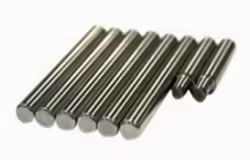
Black steel bar often looks dark after hot processing because its surface has reacted with oxygen and formed a layer of iron oxides called scale. Bright bar has had that dark surface removed or further finished, exposing a cleaner metallic appearance. The contrast tells you something about the surface’s history, but it does not by itself identify the steel’s composition or strength.
Place a dark rolled bar beside a bright finished bar and they may look like different materials. Underneath their surfaces, however, they can belong to the same family of steel. The visible difference can be much shallower than it appears.
A skin created by heat
Hot steel reacts with the surrounding atmosphere. Iron and oxygen combine to produce oxide layers on the surface. During rolling and cooling, those layers can remain attached, crack, or break away. The resulting dark gray or nearly black appearance is the reason for the everyday name “black bar.”
This dark skin is not necessarily paint. Nor is it identical to the familiar loose orange-brown rust that develops during ordinary atmospheric corrosion. Both involve iron reacting with its environment, but temperature and exposure history produce different surface structures and appearances.
A fractured patch of scale can reveal brighter metal underneath. That is why a dark bar may have a silver-looking scratch without having a silver-colored coating. The scratch has interrupted the surface layer.
Dark oxide, paint, and oil can look similar in a photograph

The label black bar usually refers to the dark surface associated with hot processing, but a photograph alone cannot establish what every dark patch is made of. A painted surface is an applied coating. Oil can change the way a surface reflects light. Oxide scale is a reaction product formed from the metal and its environment.
Those layers have different histories. Paint is deliberately placed on the object as a coating. Oil may be present as a processing or protective film. Scale develops through oxidation at elevated temperature. Describing all three simply as “black steel” would lose the distinction between the steel itself and what lies on its surface.
A newly scratched patch provides a clue, but not a complete material identification. A bright line can result from disturbing an outer layer and exposing metal below. It does not prove that the exposed steel has a particular carbon content or heat treatment.
Light adds another source of ambiguity. A metallic surface can appear almost black when it reflects a dark part of the room, then flash brightly as it turns toward a light. A surface photo records an interaction among material, geometry, and illumination, not a chemical analysis.
Several routes can uncover a bright surface

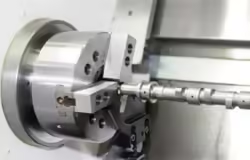
One route is peeling: cutting a thin layer away from the outside of a rotating bar. Another is grinding, which removes material through abrasive contact. Cold drawing pulls prepared steel through a shaped opening, changing its dimensions and surface as it passes.
Ovako’s description of further-processed bars distinguishes drawn, peeled, and ground products. These are different processes, even when their results all look more metallic than a scale-covered hot-rolled surface.
The distinction matters to the explanation of “bright.” The word does not require one universal polishing method. A bright surface can be the visible result of several ways of processing the outer metal.
Imagine a weathered wooden branch whose outer layer has been removed. You can immediately see the fresh material below, but that view alone does not tell you the species, how the tree grew, or how the wood will behave. Steel likewise has an internal story that a surface photograph cannot fully reveal.
Removing a skin and changing the whole bar are different operations
Suppose a dark rod is peeled so a thin outer layer becomes chips. Its visible surface changes immediately because different metal is now exposed. The process also reduces the rod’s diameter. Neither effect requires a change in the chemical composition of the steel throughout its entire cross-section.
Now consider cold drawing. Prepared metal is pulled through a die and changes shape through deformation. The surface can look bright, but the process also works the material mechanically. Its internal condition can therefore differ from that of a bar made bright mainly by removing an outer layer.
This is an important limit of the bright-versus-black comparison. Surface appearance and manufacturing route are connected, but appearance does not identify the route uniquely. Two bars may reflect light in a similar way after different processing histories.
Heating can change internal structure without creating a final bright surface. Conversely, surface removal can expose bright metal without producing the same internal changes as a hardening treatment. The operations act on different aspects of the object.
Jiyuan describes carbon and alloy round bars as well as a bright steel bar category. These descriptions help separate material family, shape, and surface condition. A useful description can need all three rather than treating shine as a substitute for the rest.
Why a bright bar can change color later
Once the scale-covered exterior has been removed, the exposed steel still interacts with its surroundings. Carbon steel is not made permanently resistant to corrosion by becoming bright. Moisture and oxygen can lead to later surface changes.
A bright bar may therefore acquire discoloration or rust during storage or exposure. That later change does not mean the original bright finish was imaginary. It means surface condition is something that can evolve over time.
Likewise, an attached dark scale layer should not be treated as a universal corrosion-proof envelope. Its cracks, edges, and adhesion vary. The presence of a dark skin alone does not describe how the entire surface will respond to every environment.
Consider a scratch through an outer layer. The scratch creates a small region with a different exposure history from the surrounding surface. Later color differences can follow that local difference. What appears as a pattern in a photograph may therefore reflect when and where the underlying steel was exposed.
Glowing steel and bright steel reflect different phenomena
A hot piece can emit visible light because of its temperature, while a cool bright bar is mainly reflecting light that reaches it from elsewhere. These are different reasons for looking bright. A glowing billet can cool until it no longer visibly glows and still retain a dark oxide surface.
Conversely, a polished-looking bar does not need to be hot to flash brightly under a lamp. Turning off or moving the lamp changes that reflection without changing the bar’s temperature. The word bright in a product description concerns the surface condition, not an instruction that the steel is glowing hot.
What does a bright surface actually tell you?
It tells you that the visible exterior reflects light in a metallic way under the viewing conditions. In the usual product context, it also points toward finishing that has removed or altered the dark as-processed exterior. Those are meaningful observations, but they stop short of identifying every material property.
It does not establish the exact grade. Carbon and alloy steels can both be finished to look metallic. It does not establish a particular hardness either; a hard surface and a soft surface can each be made bright. The word bright is most informative when it accompanies the material and processing description instead of replacing them.
Even texture is only partly visible. Large marks may be obvious, while finer grooves require closer observation or measurement. A reflection can emphasize one direction and hide another. For this reason, “looks smooth” and “has a measured surface texture” remain different statements.
A piece of dark bar and a bright piece can thus be two views of related steel at different stages in its surface history. The dark one carries the evidence of oxidation and hot processing. The bright one exposes a worked or newly uncovered exterior. Their color contrast is easiest to understand when the surface is treated as a changing part of the object, rather than as the name of the metal underneath.
Reading a Bright or Dark Steel Surface
Does bright steel mean stainless steel?
No. Bright describes a surface appearance or finishing condition, while stainless describes a material family. Carbon and alloy steels can also have bright surfaces. Removing dark scale does not change an ordinary carbon steel into stainless steel or establish its corrosion resistance.
Is a dark coating on steel always hot-formed scale?
No. Oxide scale, paint, oil, rust, lighting, and other surface conditions can all affect appearance. Scale is associated with oxidation during hot processing, but a photograph of a dark bar is not enough to identify every layer or the material beneath it.
If your interest is in a visible or machinable surface, you can ask Jiyuan about the relevant bar form using the grade, diameter, length, and intended finish as context. Saying what the surface is meant to do—remain visible, enter a machining step, or receive later treatment—makes the question more precise than asking only for “the shinier one.”