Explore spring steel grades through coil and flat spring behavior, heat treatment, and repeated loading. See why greater strength does not mean more stiffness.
Explore continuous cast billets from outside to center. Learn how solidification and segregation leave internal differences that rolling does not simply erase.
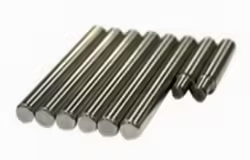
Read a bright steel bar specification with surface texture in mind. See why shine differs from measured roughness and why matching Ra values can mislead.
Compare solid square steel bar with square tube through area, wall thickness, mass, internal surfaces, and the way material is distributed during bending.
Read round bar steel grades without treating their numbers as scores. Separate naming systems from measured strength, hardness, stiffness, and toughness.
Understand negative strip time in continuous casting by comparing mold and strand speeds, with clear examples of direction, relative motion, and duration.
Follow cold drawn bright bar through a die as its section shrinks and length increases. Compare solid deformation with peeling, and explore area changes.
Explore the shape of a round corner square steel bar, how forming or edge finishing creates curves, and why a radius differs from a chamfer or diagonal.
See how spheroidizing changes bearing steel material by reshaping internal carbides, affecting deformation and machining without changing the bar’s outline.
Learn how continuous casting mold motion leaves repeating surface marks, how cycle time becomes spacing, and why a visible line is not necessarily a crack.