Why Do Tiny Particles Inside Bearing Steel Matter?
Table of Contents
Bearing steel material properties depend partly on internal inclusions that can concentrate stress during repeated rolling contact.
Tiny particles inside bearing steel matter because repeated rolling contact can concentrate stress around them. These particles, called nonmetallic inclusions, can become places where microscopic fatigue cracks begin. A bearing may look smooth and solid to the naked eye, yet its internal details help determine how it responds to millions of repeated loading events.
This is why bearing steel needs more than a hard surface. Hardness helps it resist indentation, but it does not tell the whole story about the metal underneath.
A wheel rolls over the same small places again and again
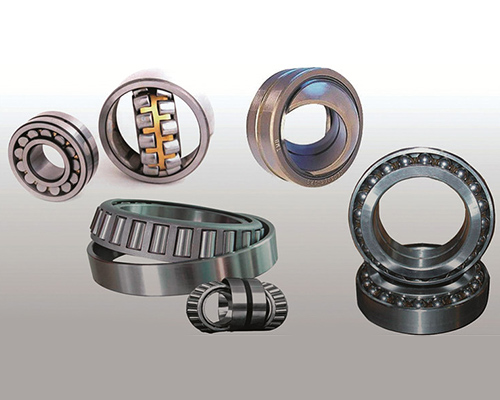
Inside a rolling bearing, balls or rollers move along curved tracks called raceways. The contact between a ball and a raceway covers only a small area. The load is carried through that small patch rather than spread evenly over the bearing’s entire visible surface.
As the bearing turns, a point on the raceway experiences a changing load whenever a rolling element passes. This repeated loading is central to fatigue. Fatigue means damage that develops through repeated changes in stress; the metal does not have to break during the first application of the load.
Bending a paper clip backward and forward demonstrates the broad idea that repetition can damage metal. Bearing fatigue is a different and more complex situation, involving rolling contact and stresses below the surface, but the paper clip helps separate “survives once” from “survives repeated use.”
What is a nonmetallic inclusion?
Steel is mostly iron, with carbon and other elements. During steelmaking, small particles of compounds such as oxides or sulfides can form or become trapped in the metal. These are called nonmetallic inclusions because their material and behavior differ from the surrounding metallic structure.
They are not necessarily little empty holes. Imagine a small hard pebble embedded in a more continuous surrounding material. The mismatch can disturb how local forces are carried. The actual response depends on the inclusion’s composition, shape, size, and connection to the steel around it.
Ovako’s account of its fatigue research explains how inclusions can act as local stress raisers and help initiate cracks under repeated loading. This does not mean every inclusion will cause a bearing to fail. The particle must be considered together with the stresses acting where it sits.
That surrounding steel is often called the matrix. The boundary between matrix and inclusion can be as important as the particle itself. A well-connected particle and one with a partly separated interface do not present the same local geometry to a changing load.
SKF’s research discussion of material imperfections in rolling-contact fatigue explains that inclusion composition and bonding can affect their influence. It describes observations in which different hard inclusion types did not have equal harmfulness. “Hard particle” is therefore a beginning of the description, not a complete ranking of risk.
Why location matters as well as size
A particle in a highly stressed region can have a different effect from a similar particle elsewhere. Think of a small tear near a heavily pulled seam in a piece of fabric compared with a similar tear in a loose, lightly loaded area. The flaw itself matters, but so does what the surrounding material is being asked to do.
For rolling bearings, the important region is not always the outermost visible surface. Contact can create significant stresses beneath it. That is why polishing the outside does not remove every possible origin of fatigue damage.
Steel “cleanliness” describes this internal inclusion population. It does not mean washing the finished bearing or removing dirt from its surface. Ovako’s bearing-steel explanation connects internal cleanliness with fatigue behavior, particularly the influence of larger defects in stressed regions. Cleaner steel means controlling what is inside the metal during its production.
How damage beneath a surface can become visible above it
One possible fatigue route begins near an inclusion below the raceway. A small crack initiates in a highly stressed local region. Repeated rolling can then drive further crack growth. If the crack branches toward the surface, a fragment can eventually separate, leaving a damaged patch called a spall.
The visible missing piece is a late stage in that sequence. The first damage may have developed beneath an outside surface that looked smooth. SKF’s explanation of subsurface fatigue distinguishes this classical mechanism from damage that begins directly at a contaminated or distressed surface.
Crack initiation and crack growth are different events. A microscopic disturbance does not instantly become a large fracture. Whether and how it develops depends on the continuing stresses and local material response. This is why the existence of a small inclusion is not a countdown clock with a fixed number of revolutions printed on it.
Researchers can sometimes identify altered structures around inclusions after cyclic loading. Such features are evidence of local material response, but their appearance should not be turned into a universal claim that every similar feature will progress to failure in the same way.
Hardness and cleanliness answer different questions
Heat treatment changes steel’s microscopic structure and can give bearing components the hardness they need. Clean steelmaking aims to control unwanted internal particles. These are related parts of making a useful material, but one does not replace the other.
A bearing’s eventual life also depends on its working conditions. Lubrication separates surfaces, contamination can introduce damaging particles from outside, and alignment changes how loads are distributed. An internally clean steel is not a promise that these outside influences disappear.
Jiyuan’s downstream steel applications include steel for bearing manufacture. That is the material stage of the story, before a finished bearing has its final geometry, heat treatment, lubrication, and working environment. The feedstock is the starting material from which the component manufacturer develops those later features.
Two meanings of clean in the same bearing
Internal steel cleanliness and clean lubrication concern particles in different places. An inclusion is already inside the metal. An external contaminant arrives at the rolling contact through the surrounding environment or lubricant. The two can influence damage by different routes.
A hard external particle passing through the contact can indent a surface. The resulting dent changes local geometry, so later rolling elements encounter an altered track. Washing away the particle afterward does not automatically flatten the dent it left behind. SKF discusses this distinction in its research on contamination and bearing life.
By contrast, a deeply embedded inclusion cannot be removed by changing the lubricant. Its location belongs to the steelmaking and material history. Improving one form of cleanliness does not erase the other source of damage.
This also explains why a bright, polished ring is not a visual certificate of internal cleanliness. Polishing changes the exposed surface. It cannot show every feature within the volume of steel beneath the raceway, just as a smooth book cover does not reveal every mark on the pages inside.
Why one microscope image cannot describe a whole ring

A polished cross-section reveals the features that intersect that particular plane. It can show the size, shape, and distribution of inclusions visible in the sampled region. Material outside the slice remains outside the image.
Imagine slicing a loaf containing a few scattered seeds. One slice might intersect several; another might intersect none. A seed seen near its edge appears smaller than the same seed cut through its center. This is a geometric sampling issue before any specialized metallurgy enters the explanation.
Steel inspection methods address such questions through defined sampling and rating procedures. ASTM E45 describes methods for determining inclusion content in steel; its methods are not a promise that one image contains every relevant particle or predicts a bearing’s working life.
The most informative material picture therefore combines several kinds of evidence: composition and processing history, internal structure, surface condition, and the conditions of use. Each answers a different question. Adding their names to a list is not enough; the evidence has to relate to the actual material and the behavior being discussed.
Bearing Steel: Particles, Hardness and Cleanliness
Are nonmetallic inclusions simply empty holes?
No. Inclusions are particles of compounds embedded in the metallic matrix. Their composition, shape, location, and interaction with the surrounding steel affect their behavior. A cavity is an empty region, so it should not be treated as the same kind of feature.
Can cleaning a bearing remove particles already inside its steel?
Cleaning the exterior or lubricant cannot remove inclusions enclosed within solid steel. Internal cleanliness concerns the material’s inclusion population. External contamination is a separate issue: loose particles entering a rolling contact can damage surfaces even when the steel itself has good internal cleanliness.
For an inquiry about bearing-steel feedstock, you can describe the intended component and material form to Jiyuan: for example, whether the steel will become ring stock or another bearing element, its required section, and the grade or processing condition already specified for the project. Those details keep the discussion connected to the material beneath the polished surface, where the microscopic features in this article begin.