Top 6 4340 Steel Properties Explained
When selecting materials for high-stress components, understanding 4340 steel properties is essential. This alloy steel combines high strength, toughness, and excellent fatigue resistance, making it a preferred choice for aerospace, automotive, and tooling applications. Below we explore six key properties that define 4340 steel’s performance.
Table of Contents
1.Chemical Composition
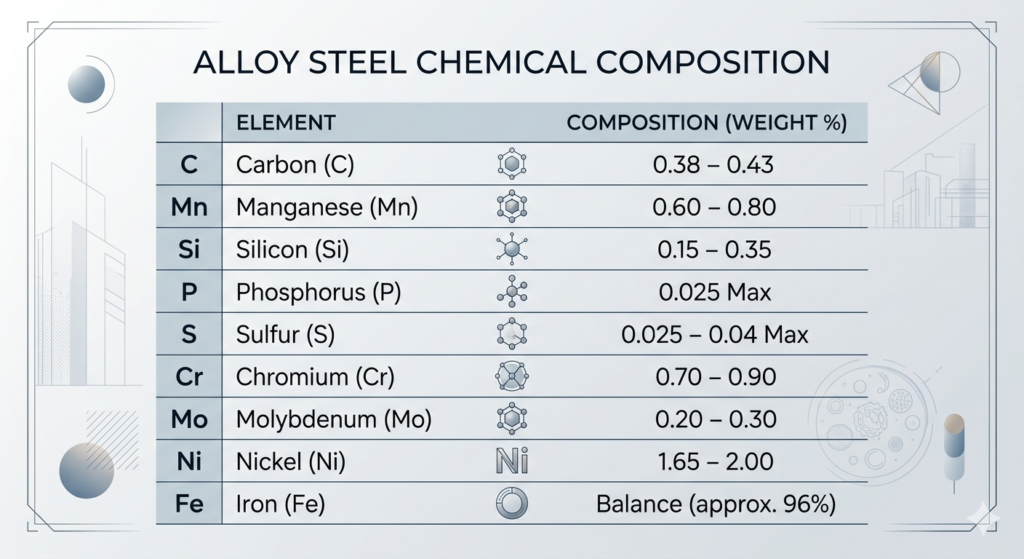
4340 steel is a Ni-Cr-Mo alloy steel, containing:
- Carbon (C): 0.38–0.43%
- Chromium (Cr): 0.70–0.90%
- Nickel (Ni): 1.65–2.00%
- Molybdenum (Mo): 0.20–0.30%
This composition provides a balance of strength, toughness, and hardenability, crucial for 4340 steel properties in demanding applications.
2.Mechanical Properties
Key mechanical metrics for 4340 steel include:
| Property | Typical Value |
|---|---|
| Tensile Strength | 970–1270 MPa |
| Yield Strength | 740–1100 MPa |
| Elongation | 18–23% |
| Impact Toughness | 50–60 J (Charpy V-notch) |
These metrics highlight why 4340 steel properties make it ideal for critical load-bearing parts.
3.Hardness
Hardness is adjustable through quenching and tempering.
- Typical HRC: 28–40
- High hardness is achieved without significantly reducing toughness.
Hardness directly affects wear resistance and longevity, a crucial aspect of 4340 steel properties.
4.Fatigue Strength
4340 steel demonstrates excellent fatigue resistance, especially after heat treatment.
- High-stress aerospace components benefit from its durability.
- Fatigue limits can exceed 550 MPa, depending on tempering.
Understanding fatigue performance is key to optimizing 4340 steel properties for cyclical load applications.
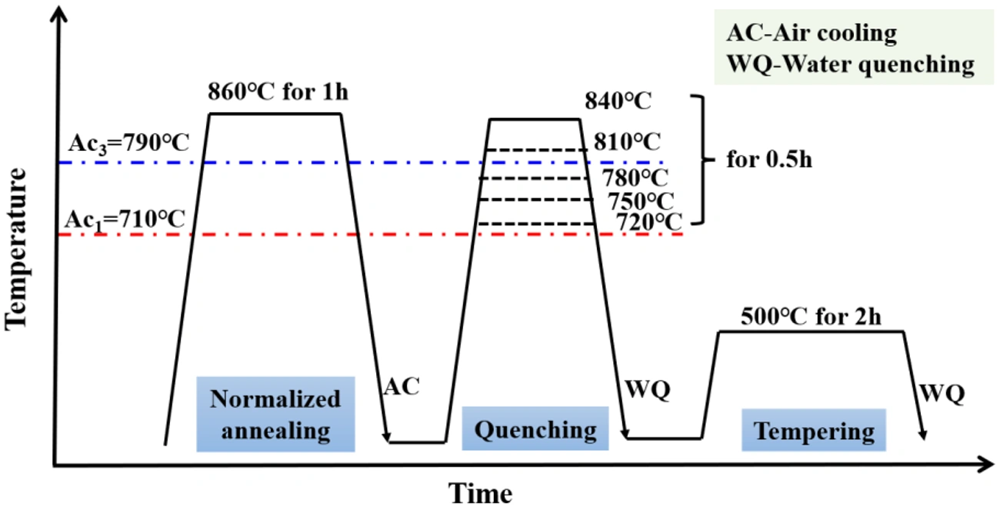
5.Heat Treatment Response
Heat treatment significantly affects 4340 steel properties:
- Quenching and tempering improves hardness and tensile strength.
- Tempering allows customization for toughness vs. hardness balance.
- Normalizing refines grain structure and enhances ductility.
6.Machining and Fabrication
4340 steel is machinable, though more demanding than 4140 steel. Tips for optimal results:
- Use sharp cutting tools and moderate speeds.
- Preheat when necessary to avoid work-hardening.
- Welding requires preheat and post-weld tempering to maintain toughness.
These considerations ensure that 4340 steel properties are preserved during fabrication and installation.
Applications of 4340 Steel
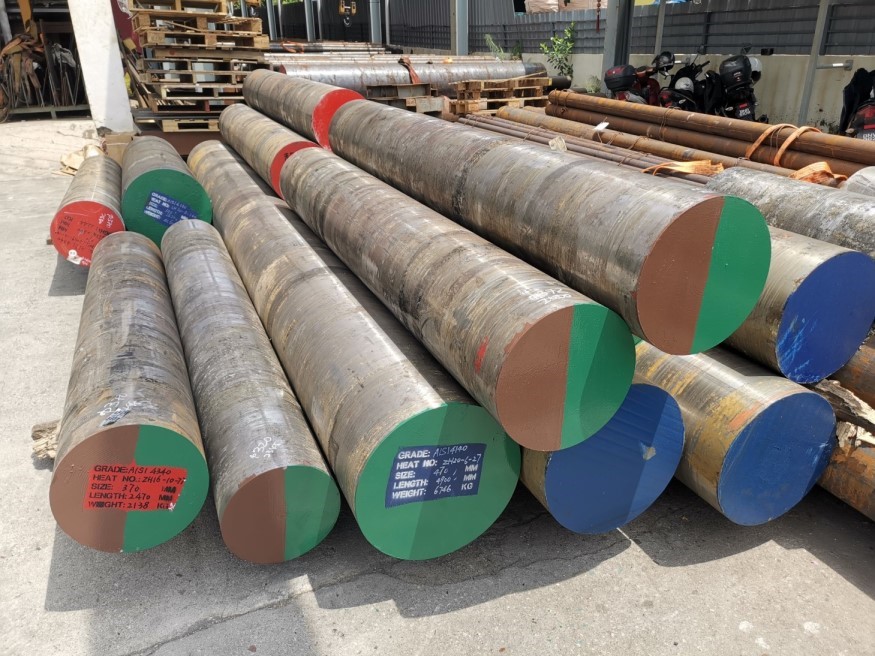
- Aerospace: landing gear, aircraft structural components
- Automotive: crankshafts, gears, and high-stress engine parts
- Industrial tooling: dies, molds, and shafts
The combination of mechanical strength, hardness, and fatigue resistance makes 4340 steel a versatile alloy.
Conclusion
The six properties outlined — chemical composition, mechanical properties, hardness, fatigue strength, heat treatment response, and machining characteristics — define 4340 steel properties. Understanding these characteristics ensures material selection is optimized for durability, performance, and safety.
FAQ
What are the properties of 4340 steel?
4340 steel properties include high tensile strength, adjustable hardness, excellent fatigue resistance, and good toughness after heat treatment.
How does heat treatment affect 4340 steel properties?
Quenching and tempering improve hardness and strength, while tempering ensures toughness and fatigue resistance.
Is 4340 stronger than 4140 steel?
Yes, 4340 has higher tensile strength, toughness, and fatigue resistance, making it preferable for high-stress applications.
Can 4340 steel be welded?
Yes, but preheating and post-weld tempering are recommended to maintain mechanical properties.
Where is 4340 steel commonly used?
Aerospace components, automotive high-stress parts, and industrial tooling.