How Does a Thin Steel Wire Become the Wide Head of a Bolt?
Table of Contents
Cold heading quality wire can become a broad bolt head when tooling compresses an end portion and redistributes the solid metal sideways.
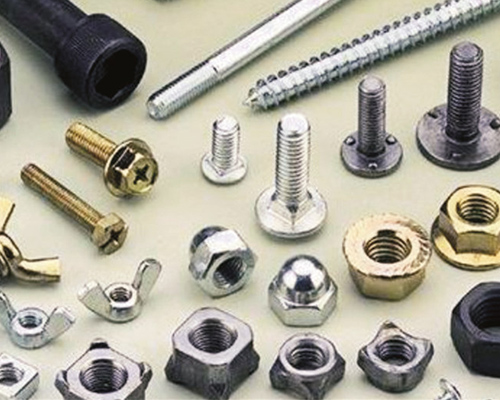
The head of a bolt can be made by compressing part of a steel wire blank so that the metal spreads sideways. This operation, called upsetting, redistributes solid steel into a shorter, wider shape. In cold heading, the material is formed without first heating it into a hot-forging condition. The broad head grows from the original wire rather than being glued onto it.
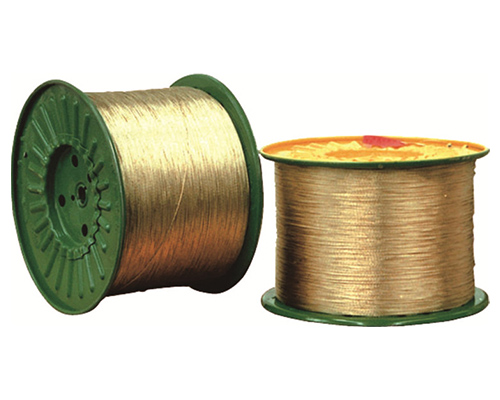
“Wire” here can mean substantial industrial feedstock, not just the thin flexible strand in an electrical cable. A coil can supply material that will become a series of separate fasteners. Each fastener starts with a measured amount of steel, and part of that amount becomes the head.
The surprising part is the direction of movement. A tool pushes along the blank’s length, yet the head grows across its width. The metal has not appeared from nowhere. The shortening length provides the volume that occupies the wider shape.
Hold the shank, let the head develop
Imagine a short cylindrical blank supported by a die, with a portion projecting beyond the support. A punch moves toward that projecting end. As it presses, the projecting portion becomes shorter and spreads into the available space. The die and punch guide the metal instead of allowing every part of the blank to move freely.
The supported portion and the projecting portion have different jobs in this picture. Much of the supported length remains associated with the future shank. The extra material at the end supplies the broad head. This makes the starting length important: the head needs a real reserve of metal, not simply an instruction to become wider.
Support also explains why heading is not the same as pushing on any long, thin rod and expecting a neat head. A long unsupported piece may bend sideways instead of shortening in the desired region. The tooling controls where deformation can occur and helps direct it toward the intended shape.
A simple mental demonstration is to press a short piece of soft modeling material between flat surfaces. It becomes wider as it becomes shorter. Steel needs very different forces and tooling, but the visible volume relationship is the same. During heading, the workpiece remains solid; it does not melt and pour into the head cavity.
The word “flow” describes this permanent deformation. It does not mean the steel has become a liquid. At the microscopic scale, the crystal structure accommodates movement that allows the shape to change permanently. Once the force is removed, the blank does not simply return to its original slender cylinder.
Count the material that becomes the head
Consider an intentionally simple example: a cylindrical portion of wire 6 millimeters in diameter and 8 millimeters long. Its radius is 3 millimeters, so its volume is π × 3² × 8, or 72π cubic millimeters. That is approximately 226.19 cubic millimeters of steel.
If that same volume became a perfect cylindrical head 12 millimeters in diameter, the head area would be π × 6², or 36π square millimeters. Dividing volume by area gives a height of 2 millimeters. Doubling the diameter makes the area four times larger, so the length must become one-quarter as large to preserve volume.
The calculation does not say that every real bolt with a 6-millimeter shank has this head. It deliberately ignores corner shapes, transitions, recesses, and other details. It shows how the wide region can be supplied by a relatively short length of narrower material.
Now include a shank in the imaginary blank. Suppose 30 millimeters of the same 6-millimeter cylinder remains unchanged as a simple shank, and another 8 millimeters supplies the ideal head. The starting blank is then 38 millimeters long. Its volume is 342π cubic millimeters: 270π in the shank plus 72π in the head.
After forming, the ideal shape occupies 30 millimeters of shank length plus 2 millimeters of head height. Its total end-to-end length is 32 millimeters, even though it contains the same volume as the original 38-millimeter cylinder. The missing six millimeters of length has become extra width at the head.
This is why comparing only the length before and after heading can be misleading. Length is not conserved; volume is approximately conserved during the plastic deformation of the metal. A dimensional change in one direction is accompanied by changes in the other directions.
For a real head, the calculation follows the actual shape rather than a perfect cylinder. Rounded transitions consume volume. A recessed drive feature changes the local geometry. Material displaced by a punch must go somewhere else in the developing form. The total amount in the blank still constrains what shapes can be produced from it.
Why the head may take several blows
A broad or detailed head need not appear in its final form in a single step. A first stage can gather and shape the projecting material into a preliminary form. A later stage can move it closer to the finished outline. The intermediate shape makes the next movement more manageable.
Think of making a complex shape from a lump of clay. You would not necessarily press one elaborate stamp into a badly placed lump and expect every corner to fill evenly. You would first distribute the material where it is needed. In heading, each tool and intermediate shape are designed around the next stage of metal movement.
This does not mean that every fastener requires the same number of stages. A simple shape and a more demanding shape present different deformation problems. The point is that “formed from wire” describes a route, not necessarily one instantaneous action.
Contact with the tools also affects the movement. Material at a contacting surface does not always move as freely as material farther from that surface. Friction and lubrication influence how deformation is distributed. The final shape therefore depends on more than the overall amount of force applied.
Nippon Steel’s research on steel behavior during forging examines the relationship between deformation conditions, lubrication, and fracture. It provides a useful reason to view heading as a controlled material-flow process rather than a contest to hit the blank as hard as possible.
The surface has to travel too
As the head expands, the outer surface changes shape along with the interior. A patch of surface that once occupied a narrow cylindrical side can become part of a much wider region. It must accommodate that deformation rather than simply remain unchanged like paint on a rigid object.
This is one reason cold-heading quality is not synonymous with maximum initial hardness. The starting steel must be capable of passing through the intended forming sequence. A material can resist indentation yet lack the deformation behavior needed for a particular upset. Strength in one test does not automatically describe success in a different manufacturing operation.
The original surface condition matters because a feature on that surface moves with the metal. It is not automatically erased by compression. Depending on the flow, a surface feature may become stretched, moved, or incorporated into a new location. The head-forming route has to work with the material that actually enters it.
Jiyuan includes steel for cold heading among its downstream-product applications. That offering connects directly with the transformation described here: the material is intended for a manufacturing route in which solid steel must change shape substantially. It is the steel feedstock for such work, rather than a catalog of completed bolts.
What heading saves, and what it does not finish
A comparable broad-headed shape can also be made by machining a larger piece of steel. In that route, enough starting diameter is needed to contain the head, and material around the narrower shank is cut away. The difference between the large starting cylinder and the final part leaves as chips.
Heading approaches the same geometric problem from another direction. The starting section is closer to the narrower region, and material at one end expands to create the wider region. Much of the steel remains in the part through the head-forming step instead of being removed from around the shank.
That comparison explains a potential material-use advantage without claiming that heading creates zero waste. Blanks must be produced, some shapes involve trimming, and different process routes have different losses. The meaningful distinction is that the principal head-forming action redistributes steel rather than carving the entire head-and-shank shape from a larger solid.
Heading also does not finish every feature of a bolt. The head shape, the thread, and the final material condition are separate aspects of the finished fastener. Other operations may follow. A smooth shank with a formed head is already recognizable, but it is not the same object as a fully completed, threaded fastener.
Look again at the ideal 38-millimeter blank that became a 32-millimeter headed shape. Its shorter final length is the visible record of where the steel traveled. The head’s extra width was once stored along the length of the wire.
Where a Bolt Head Gets Its Steel
Is a cold-headed bolt head attached to the wire afterward?
In the upsetting route described here, the head is formed from the original blank. A projecting portion becomes shorter and spreads sideways under tooling. The steel remains solid, and its volume is redistributed into the wider head rather than supplied by an added cap.
Why can a head need several forming stages?
An intermediate shape can place material where a later stage needs it. Successive tools guide the flow toward a more complex final outline rather than demanding every movement at once. The required sequence depends on the shape and material; not every head uses the same number of stages.
When exploring that material, describe the intended fastener, starting section, grade, and feedstock form. A sketch of the head and shank is especially useful because the size of the head relative to the starting section explains much more about the forming task than the word “bolt” alone.
Send a head-and-shank sketch with your inquiry about steel feedstock for cold heading.