See how etching reveals patterns inside continuous cast steel, why section preparation matters, and what a two-dimensional billet image cannot establish.
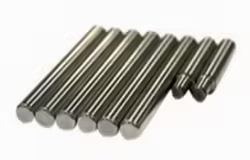
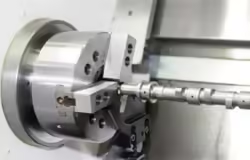
Explore the bright bar manufacturing process through peeling and grinding. Follow the removed metal and learn how each route creates a new outer surface.
Explore how HR steel square bar can be straight yet twisted, why matching end views can hide rotation, and how bow differs from changes in face orientation.
Explore spring steel grades through coil and flat spring behavior, heat treatment, and repeated loading. See why greater strength does not mean more stiffness.
Explore continuous cast billets from outside to center. Learn how solidification and segregation leave internal differences that rolling does not simply erase.
Read a bright steel bar specification with surface texture in mind. See why shine differs from measured roughness and why matching Ra values can mislead.
Compare solid square steel bar with square tube through area, wall thickness, mass, internal surfaces, and the way material is distributed during bending.
Read round bar steel grades without treating their numbers as scores. Separate naming systems from measured strength, hardness, stiffness, and toughness.
Understand negative strip time in continuous casting by comparing mold and strand speeds, with clear examples of direction, relative motion, and duration.
Follow cold drawn bright bar through a die as its section shrinks and length increases. Compare solid deformation with peeling, and explore area changes.