What Does Spheroidizing Change Inside Bearing Steel?
Table of Contents
Spheroidizing changes carbide shape and distribution inside bearing steel material, helping the overall structure deform and machine more readily.
Spheroidizing changes the shape and arrangement of hard carbide particles inside bearing steel. A suitable heating cycle encourages these carbon-rich features to become more rounded, dispersed particles in a softer surrounding structure. The outside of the steel may look unchanged, but its microscopic landscape becomes easier to deform and machine.
The word comes from “sphere.” It describes a change inside the material, not a process that turns a square bar into a round one. Nor does it mean every particle becomes a perfect little ball.
Steel has an internal pattern
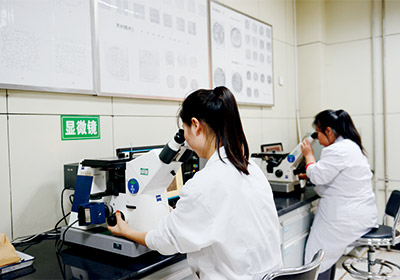
Steel is not a featureless block of iron with carbon sprinkled evenly through it. Depending on its composition and previous treatment, carbon can be held within different structures or concentrated in carbides. Carbides are hard compounds containing carbon and a metallic element.
One common steel microstructure is pearlite. Under suitable magnification, pearlite shows alternating layers of softer ferrite and harder cementite. Ferrite is an iron-rich phase; cementite is an iron carbide. Their layered arrangement gives the material a different response from a structure containing separate rounded carbide particles.
High-carbon bearing steels can contain other carbide features as well. The starting pattern depends on the material’s history, so spheroidizing does not always begin with an identical microscopic picture.
A layered structure is more than a mixture of ingredients
Two structures can contain the same broad ingredients while arranging them differently. Picture a layered sandwich and a mixture in which the same filling is distributed as separate pieces. The total quantity of each ingredient can be similar, yet a path through the object encounters different sequences of material.
In pearlite, the layers are microscopic regions of ferrite and cementite, not food-like coatings placed on a finished bar. The arrangement develops through transformations within the steel. The University of Cambridge’s account of pearlite in steels describes this two-phase structure and its formation.
The word phase means a distinct material structure within the steel. It is different from a grain, which is a crystal region with a particular orientation. A carbide particle, a grain, and the round outline of the bar are therefore three different levels of description. Spheroidizing concerns the carbide morphology, meaning its form and arrangement.
This helps resolve a misleading mental picture. The treatment is not rounding every steel grain into a ball and is not turning all the steel into a pile of loose beads. A continuous metallic matrix still holds the carbide features within a solid object.
Why do the particles become rounder?
A long thin feature has more boundary area relative to its volume than a compact rounded one. At elevated temperature, atoms can move, and carbide structures can evolve toward shapes with less interfacial energy. Appropriate heat treatment gives that rearrangement time to occur, as the University of Cambridge explains in its account of pearlite spheroidisation.
Imagine the difference between a long ribbon and a collection of small beads embedded in another material. The ribbon reaches across the structure differently from the beads, even if the total amount of its material is similar. In steel, particle shape and distribution change how the surrounding metal can deform.
This is not carbide melting into droplets inside a liquid bar. The treatment concerns changes within solid steel, driven by diffusion and phase behavior. Diffusion is the movement of atoms through the material over time.
Why a thin plate has so much boundary
Take a simple geometric plate with a fixed volume. Spread it into a thinner, wider sheet and its two broad faces become larger. Gather the same volume into a compact shape and the exposed boundary can become smaller. The material has not vanished; its geometry has changed.
For a very thin rectangular plate, ignoring its small edge faces, volume is approximately broad-face area multiplied by thickness. The two broad faces have a combined area about twice the volume divided by thickness. Making the plate thinner therefore increases boundary area per unit volume.
That is why a finely layered structure can contain a great deal of interface between its phases. The motivation to reduce interface is not a desire of the steel in a human sense. It is an energetic tendency that can be expressed when atomic movement makes a different arrangement possible.
A compact shape alone does not tell the whole story of the final particle population. The distribution of particle sizes and separations also matters. Many small particles have a different combined boundary area from a few large ones containing the same total volume. Shape, size, and spacing need separate words because they are not interchangeable features.
Time allows a solid structure to rearrange
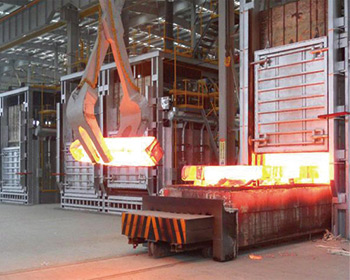
At room temperature, the internal pattern can look effectively frozen on an ordinary viewing timescale. Heating increases atomic mobility. Atoms can redistribute through diffusion, allowing the carbide pattern to evolve while the overall piece remains solid.
The starting arrangement affects that evolution. Research by Ferrer and colleagues comparing different pearlitic microstructures during reheating found that initial layer spacing influenced the progress of globularization and the resulting mechanical changes in the studied steels. Globularization is another term emphasizing a more rounded particle form.
The study does not supply one universal schedule for all bearing steel. It demonstrates why the initial microstructure belongs in the explanation. Two pieces with similar external dimensions need not begin with the same spacing and shape of internal features, so one simple time label cannot describe every transformation route.
The treatment’s name likewise does not mean an instantaneous event. An intermediate structure may retain some layered features while other regions have become more rounded. A microscopic image can show a stage in that evolution rather than a perfect before-or-after cartoon.
A cutting tool meets the whole mixture
During machining, the metal near a cutting edge must deform and separate into a chip. A structure with rounded carbides in a softer surrounding matrix can respond more readily than one with harder, more continuous carbide arrangements. This is why the spheroidized condition is associated with preparing many high-carbon steels for shaping.
The matrix means the surrounding material in which the particles sit. It is not empty space between them. Both matrix and carbides participate when the steel is pressed, bent, or cut.
ASTM A892 concerns characterization of carbide structures in annealed high-carbon bearing steels. It treats carbide structure as something that can be described and compared, rather than reducing the condition to a single word such as “soft.” Particle size, distribution, and remaining patterns all contribute to the microscopic picture.
Softening does not mean the carbides have become soft
The bulk steel can become easier to deform and machine while its carbides remain hard features. The changed response comes from the whole arrangement: how the softer matrix deforms, how the hard regions are distributed, and how a cutting path encounters them.
This is different from imagining that every microscopic constituent has acquired the same lower hardness. A composite structure can change its overall behavior when its geometry changes, even though its constituents retain contrasting properties.
It is also different from removing carbon from the steel. Decarburization concerns carbon loss, typically beginning at an exposed surface during certain heating conditions. Spheroidizing aims to reorganize carbon-containing structures within the material. One is a composition-change issue; the other is chiefly a microstructure-change process.
Carbides should not automatically be grouped with unwanted nonmetallic inclusions either. Carbides are part of the steel’s intended phase structure and heat-treatment response. An oxide inclusion comes from a different material history and raises different questions. Both may appear as features in a microscope image, but that visual similarity does not give them the same role.
After the component has been shaped, a later heat treatment can develop the structure required for its working life. That later stage does not erase the purpose of spheroidizing: during manufacture, the cutting tool or forming tool meets the softened matrix-and-carbide arrangement that the earlier treatment created.
Inside Spheroidized Bearing Steel
Does spheroidizing make the outside of a bearing-steel bar round?
No. It describes changes in the microscopic shape and arrangement of carbides inside the steel. Plate-like features become more rounded during a suitable treatment. The bar’s external section can remain unchanged while its internal structure becomes easier to deform and machine.
Do the carbide particles become soft during spheroidizing?
The explanation is not that every hard carbide becomes soft. Their shape and distribution change within the surrounding matrix, altering how the mixture responds to deformation and cutting. The properties of the particles and those of the overall steel structure must be kept separate.
Jiyuan’s steel for downstream applications includes bearing-steel material. If your interest concerns the starting condition before machining or forming, you can describe the required feedstock and next operation to Jiyuan, with the grade and section if known. Specifying an annealed or spheroidized condition where it is already part of the design makes the material discussion more informative than asking only for a “soft bearing steel.”
Ask Jiyuan about bearing-steel feedstock for the machining or forming step you have in mind.